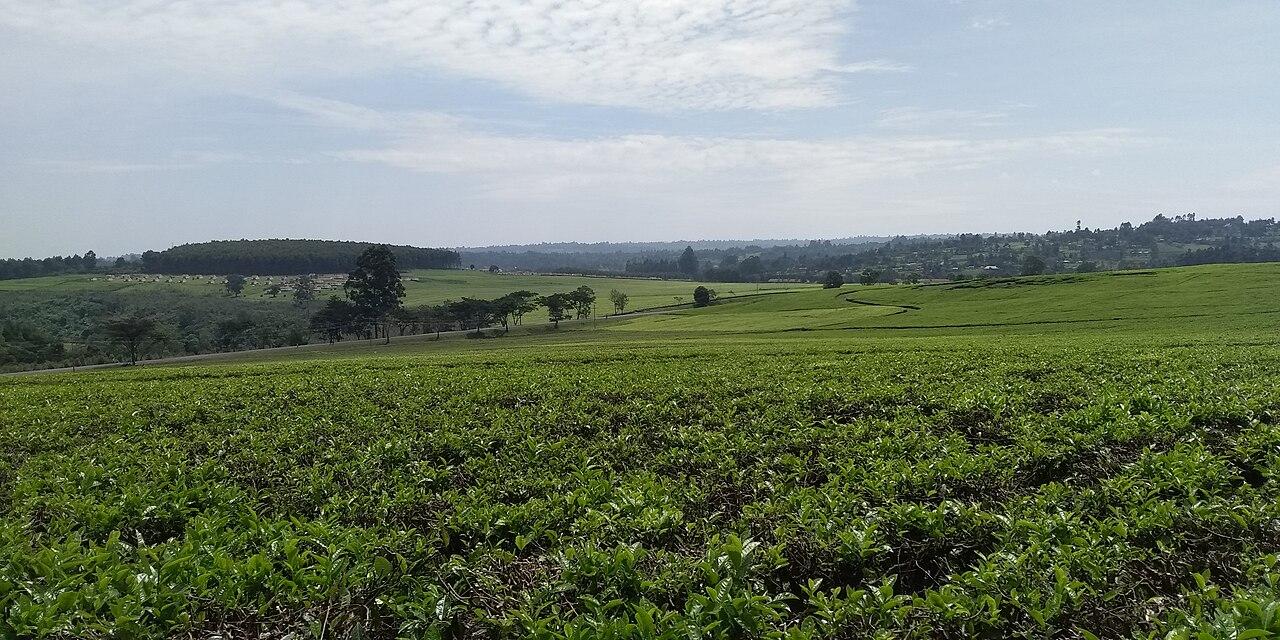
The Front Desk in Essen: How a Kitale Teacher's Ausbildung Bet Tests Kenya's Newest Diaspora Door
Linda Almasi walked away from a TSC post in Kwale for a Motel One front desk in western Germany. Her path traces one of the most quietly important migration deals Kenya has signed this decade.
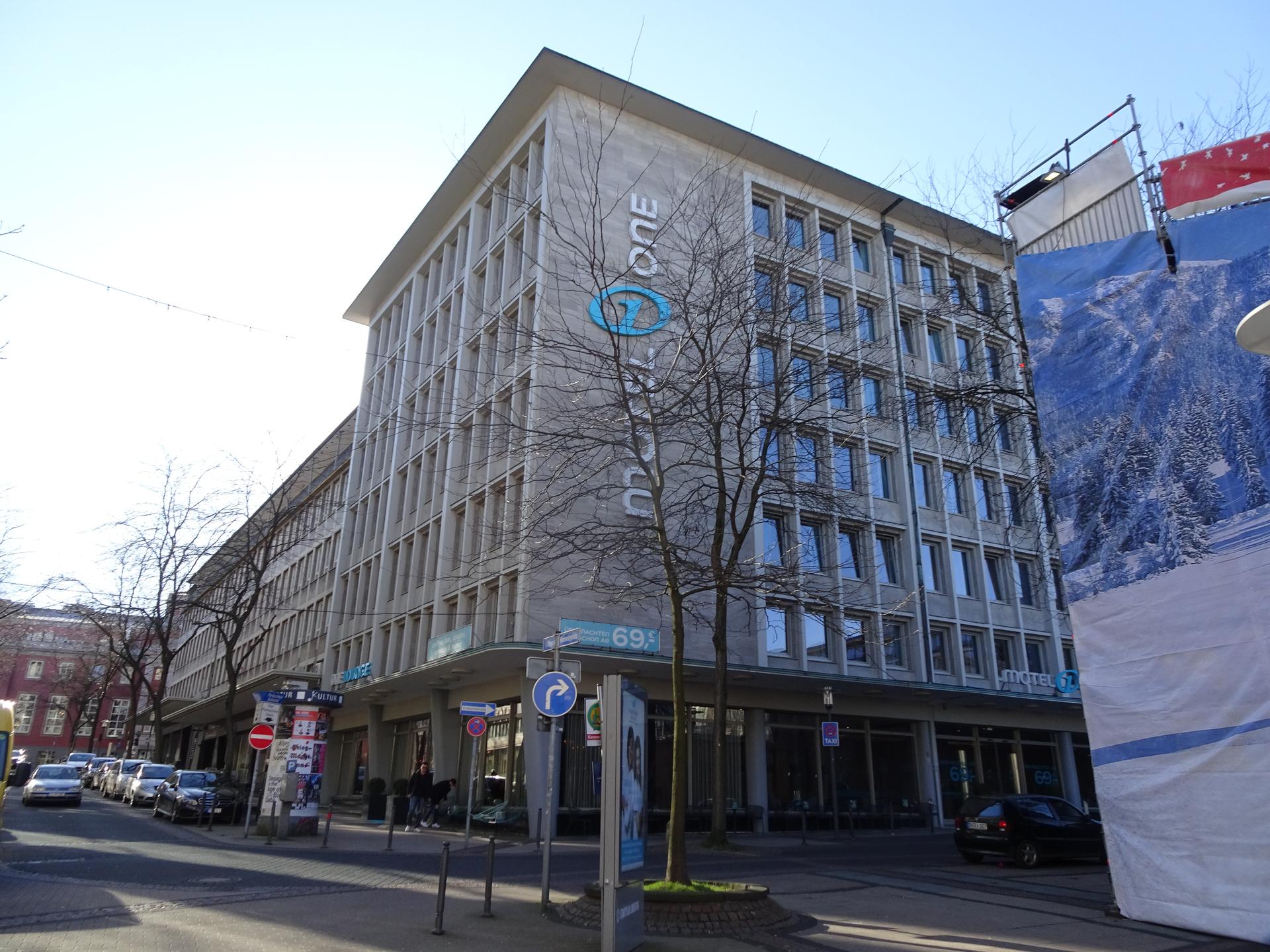
A small classroom in Kwale County, with chalk dust caught in the afternoon light from a louvred window, is a long way from a sliding glass door on Essen's Kruppstraße. Linda Almasi has stood at both. The Kenyatta University-trained Kiswahili and History teacher began her working life at Kaya Tiwi High School, just inland from the Diani coast, marking Form Two essays and running sports afternoons. Three years later she is a front office agent at Motel One in Essen, a Ruhr-valley industrial city of around 580,000 people, greeting guests who are sometimes more nervous than she is about the German they are trying to use.
Her path from Kitale to Essen, told this week in a profile by Mwakilishi.com's Martin Olage, reads on the surface like a single career change. Looked at more carefully it is also a small marker of a much larger migration channel — one Nairobi and Berlin signed in 2024 and are only now learning how to walk through.
A decision made in Kitale
Almasi had wanted to study law. Financial constraints and academic results pointed her instead toward education, a profession she came to value but eventually outgrew, by her own telling, on grounds of pay and long-term mobility. Teachers Service Commission posts are widely respected at home, but the rising cost of living in Kenya and the limited room for advancement made the arithmetic harder every year she did the sums.
The teaching itself was not the part she was running from. The classroom, she has said, taught her how to read a room, hold attention, prepare a session, and absorb the long workdays that hospitality also demands. Even the collaborative gender-and-development projects she joined at Kaya Tiwi, with visiting students from Switzerland, were the first hints that another professional life might be visible from the one she already had.
The Diani detour
Almasi had also worked part-time at a restaurant in Diani, the white-sand resort strip a short matatu ride from her school. Diani's clientele is heavily European, and a great many of them are German. She has described those shifts as the first real audition — speaking to international guests, learning the rhythms of a tourist-economy front-of-house, finding she liked them.
That part-time work matters more than it sounds. The German labour route Almasi eventually took, the Ausbildung apprenticeship, depends on a young Kenyan being able to show direct, demonstrable experience in the trade they want to train in. Restaurants in Mombasa, Diani, Nanyuki and Watamu are quietly producing some of the strongest Ausbildung applicants in Kenya, and the EssenOst Berufskolleg cohort Almasi joined in 2023 is one of the more visible end-points of that pipeline.
A B1 certificate, then a visa
Before she could move, Almasi did the unglamorous work the headlines about migration deals rarely describe. She studied German to B1, the level the German foreign office requires for qualified vocational training under the Skilled Immigration Act. She rewrote her CV in the German style. She gathered the school confirmation, the employer acceptance letter and the passport documents the Nairobi consulate's published checklist sets out, and submitted through the visa service provider that handles applications for the embassy.
She landed in Germany in July 2023 to begin a three-year hospitality programme at EssenOst Berufskolleg. The Ausbildung structure pairs vocational-school instruction with paid on-the-job training inside a sponsoring employer — in her case the hotel group Motel One, which now operates across Germany, the rest of Europe and the United States. Trainees this year earn between roughly €900 and €1,300 a month, before tax and accommodation. The training itself is free; the employer carries the cost.
The deal that did not promise 250,000 jobs
Almasi's story sits inside a bigger frame. In September 2024, Chancellor Olaf Scholz and President William Ruto signed a Migration and Mobility Partnership between Germany and Kenya. The Kenyan presidency described it at the time as a path toward as many as 250,000 jobs for Kenyans in Germany. Berlin, more cautiously, said the agreement contained no quotas and no automatic numbers, only a framework for German-language training, apprenticeship and skilled-worker recruitment, plus return and readmission arrangements for Kenyans living in Germany without status.
The gap between Nairobi's headline figure and Berlin's framework language matters. Anyone hoping to use the deal still has to clear the German Skilled Immigration Act on their own merits — the language test, the employer offer, the qualification recognition. About 15,000 Kenyans were already living or working in Germany when the partnership was signed, making Germany one of the more important Western destinations for the Kenyan diaspora after the United States and the United Kingdom. The deal has not yet visibly reordered that ranking. What it is doing, slowly, is widening the front door for people like Almasi.
What the Ausbildung pays, and what it costs
The German labour market needs the workers. Germany has well over 60,000 unfilled Ausbildung positions and a broader skills shortage that is now openly discussed in its industry chambers. Hospitality, nursing, electrical trades and elder care sit at the front of the queue. The African Skills 4 Germany pilot project, running from mid-2024 through December 2026 across eleven African partner countries including Kenya, is the lower-profile machinery underneath the Scholz-Ruto signing.
The price for the migrant is real. Almasi has spoken of darker winters, a culture that prizes punctuality and direct speech, and the work of building a social life in a language that is not your first. None of this shows up in the recruiter brochures that circulate in Nairobi. The Kenyan human resource specialist Richard Magoma, quoted in the Mwakilishi profile, points to the more general truth: career transitions that look clean from the outside almost always rest on a year or two of unseen preparation, and on a quiet decision that the home country's ceiling has been reached.
A new diaspora map, drawn slowly
For now, the German chapter of the Kenyan diaspora is small enough to fit inside a handful of WhatsApp groups. It is also one of the few that is growing primarily through formal, government-blessed channels rather than family reunification, student visas or asylum. That makes it a useful test case for the wider question Kenya is asking itself in 2026 — whether the labour migration corridors it is signing, in the Gulf, in the United Kingdom and now in central Europe, will produce sustainable remittance flows and skill returns or simply scatter another generation of teachers, nurses and waiters across someone else's tax base.
Almasi has said she still misses her classroom. She has also said she would like, eventually, to combine teaching and hospitality through mentorship or training projects, perhaps linking learners in Kitale with the German employers she now works alongside. If she does, her front desk in Essen will turn out to have been less a destination than a sketch — one early line on a map the next decade of Kenyan migration is still drawing.