The Dish on the Hill: What SpaceX's Record IPO Means for the Kenyan Homes at the End of Musk's Signal
SpaceX became the largest stock-market debut in history this week, minting Elon Musk as the world's first trillionaire. For Kenyans abroad keeping rural family online, the milestone lands closer than it looks.
On a ridge in one of Kenya's drier counties, where the fibre lines never arrived and the nearest mast drops to a single bar after dark, a small rectangular panel now tilts toward the sky. It is a Starlink terminal, and for the household beneath it the device has quietly rearranged daily life: a daughter sits her online exams without trekking to a town cyber cafe, a clinic uploads patient records, and on Sunday evenings a video call connects the homestead to a son in Dallas or an aunt in Manchester who, more often than not, helped pay for the kit in the first place.
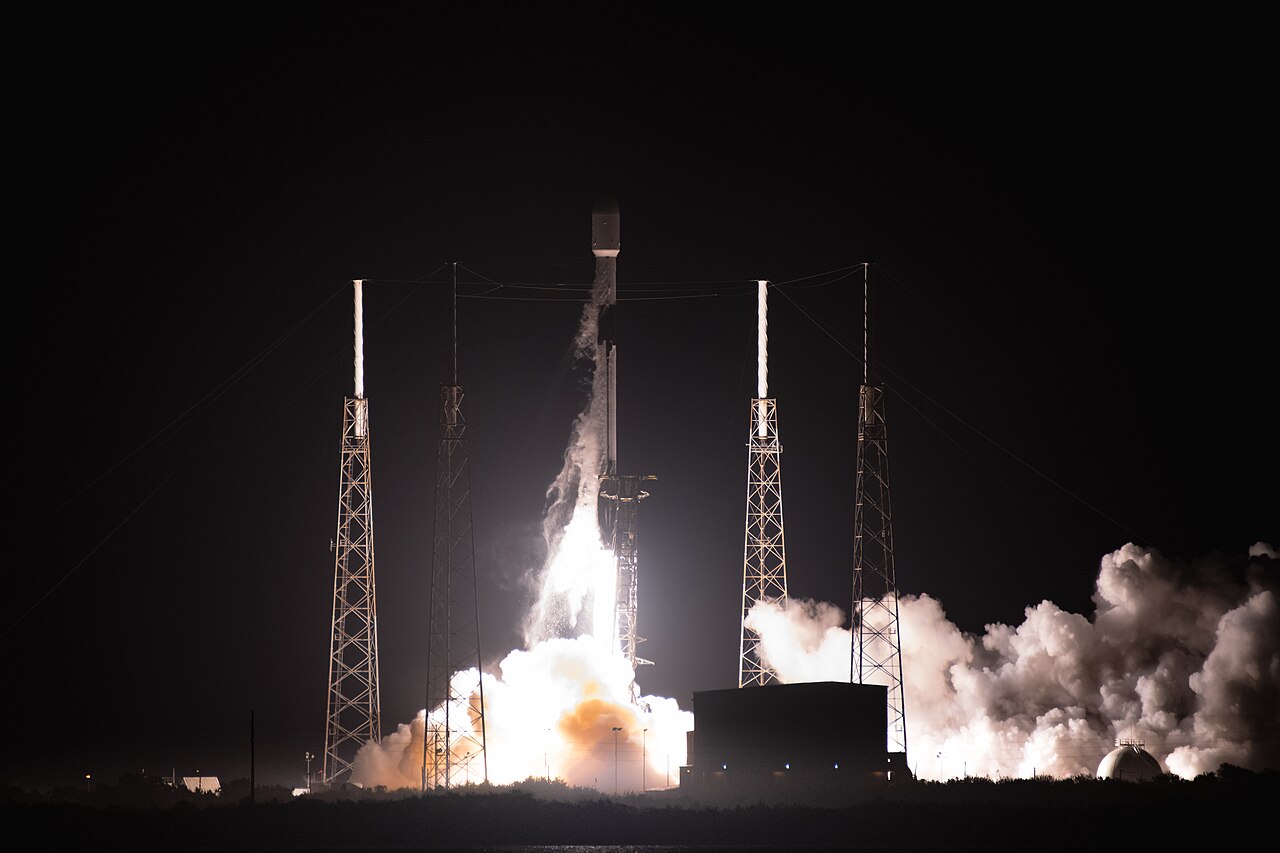
That panel is part of a network owned by a company that this week became the most valuable market debut in history. The distance between a launch pad in Florida and a dish on a Kenyan hill has rarely felt so short.
The Largest Debut in Market History
SpaceX listed its shares on the US market on 12 June, and the numbers were the kind usually reserved for national budgets. According to Al Jazeera and CNBC, the company priced its stock at about $135 a share and saw it jump sharply on the first day of trading, lifting SpaceX's valuation toward the $2 trillion mark. The offering raised roughly $75 billion, making it the largest initial public offering ever recorded, comfortably eclipsing Saudi Aramco's $29 billion sale in 2019.
What makes the figure striking is what sits beneath it. SpaceX reported a loss of close to $5 billion last year and earns only a fraction of the revenue of similarly valued technology giants. Investors are not buying current profits so much as a bet on a single, fast-growing business line: Starlink, the satellite-internet service that already accounts for as much as 80 percent of the company's revenue. The rocket business made SpaceX famous; the broadband business is what made it a trillion-dollar story.
A Trillion-Dollar Milestone, and Its Critics
The listing pushed Elon Musk past a threshold no individual had crossed before. With his combined stakes in SpaceX and Tesla, his net worth is now estimated at around $1.1 trillion, making him, by most reckonings, the world's first trillionaire.
The milestone drew immediate political pushback in Washington, where Senator Elizabeth Warren noted that a typical American household would need to work for millions of years to accumulate that kind of wealth. The debate over concentration of fortune is, in one sense, an American argument. But it travels. The same network that minted the milestone is increasingly the infrastructure through which Kenyan villages reach the wider economy, which means the conversation about who owns the satellites is no longer happening only in the Global North.
The Satellites Over Rural Kenya
Starlink has grown quickly in Kenya since launching there. By late 2025 it had become the country's largest satellite-internet provider, reporting roughly 19,460 active users in September and around 22,282 fixed subscribers by December, according to industry trackers and the Communications Authority's data. In absolute terms that is still small, under one percent of Kenya's fixed-internet connections, but the growth curve and the geography matter more than the raw share. Starlink reaches places the established providers have long treated as commercially hopeless.
The company has also moved to address its biggest obstacle in a price-sensitive market: cost. It introduced an instalment option that lets customers pay about 6,750 shillings upfront for the smaller Mini kit, rather than the full retail price of roughly 27,000 shillings. Partnerships have widened the footprint further. A collaboration with Microsoft and the local operator Mawingu is wiring hundreds of community hubs, and a deal with Airtel Africa aims to extend coverage into underserved areas, with direct-to-cell services planned in phases. The effect is incremental but real: connectivity is creeping into corners of the country that the national grid of cables skipped entirely.
Why the Diaspora Is Watching
For Kenyans abroad, this is not an abstract tech-stock story. Remittances are the single largest source of foreign exchange flowing into Kenya, and a meaningful slice of that money goes not into consumption but into infrastructure for the people left behind, school fees, medical bills, home improvements, and, increasingly, the cost of getting a rural home online. A diaspora worker who wants to see a parent's face on a screen, supervise a construction project from afar, or keep an ageing relative reachable in an emergency has a direct stake in whether the signal reaches the homestead.
That is why a Florida launch and a Nairobi subscription ledger are now part of the same equation. The upfront cost of a terminal, daunting on a local wage, is far more manageable when split with a relative earning in dollars or pounds. The monthly fee, similarly, is the sort of recurring expense that diaspora households routinely absorb. In practice, the expansion of satellite internet across rural Kenya is being underwritten, in part, by money sent home, which ties the fortunes of a Seattle nurse or a London driver to the valuation of a company they may never have knowingly invested in.
The Distance Between a Valuation and a Village
It would be easy to read the week's headlines as a pure triumph, and just as easy to dismiss them as a billionaire's vanity. Both miss the more useful point. A two-trillion-dollar valuation does not, by itself, lower a Kenyan family's data bill or guarantee that the next instalment plan stays affordable. The service remains beyond the reach of most households, and dependence on a single foreign provider for critical connectivity carries its own risks, from pricing power to questions of data sovereignty that African regulators are only beginning to confront.
What the IPO does confirm is the direction of travel. The money now agrees with what rural users already knew: the future of connectivity in places the cables forgot is being beamed from low orbit. For the Kenyan diaspora, that future is not a spectator sport. It is the reason a call connects on a Sunday evening, and the reason a dish sits on a hill where, not long ago, there was only silence after dark.