The Barefoot Fields of Dandora: How a Houston Newborn Specialist Became the Diaspora's Influencer of the Year
Mary Wairimu Macharia went from Nairobi to Doha to Texas. Her rise from brand promoter to award-winning community leader maps the quieter victories of Kenyan life abroad.
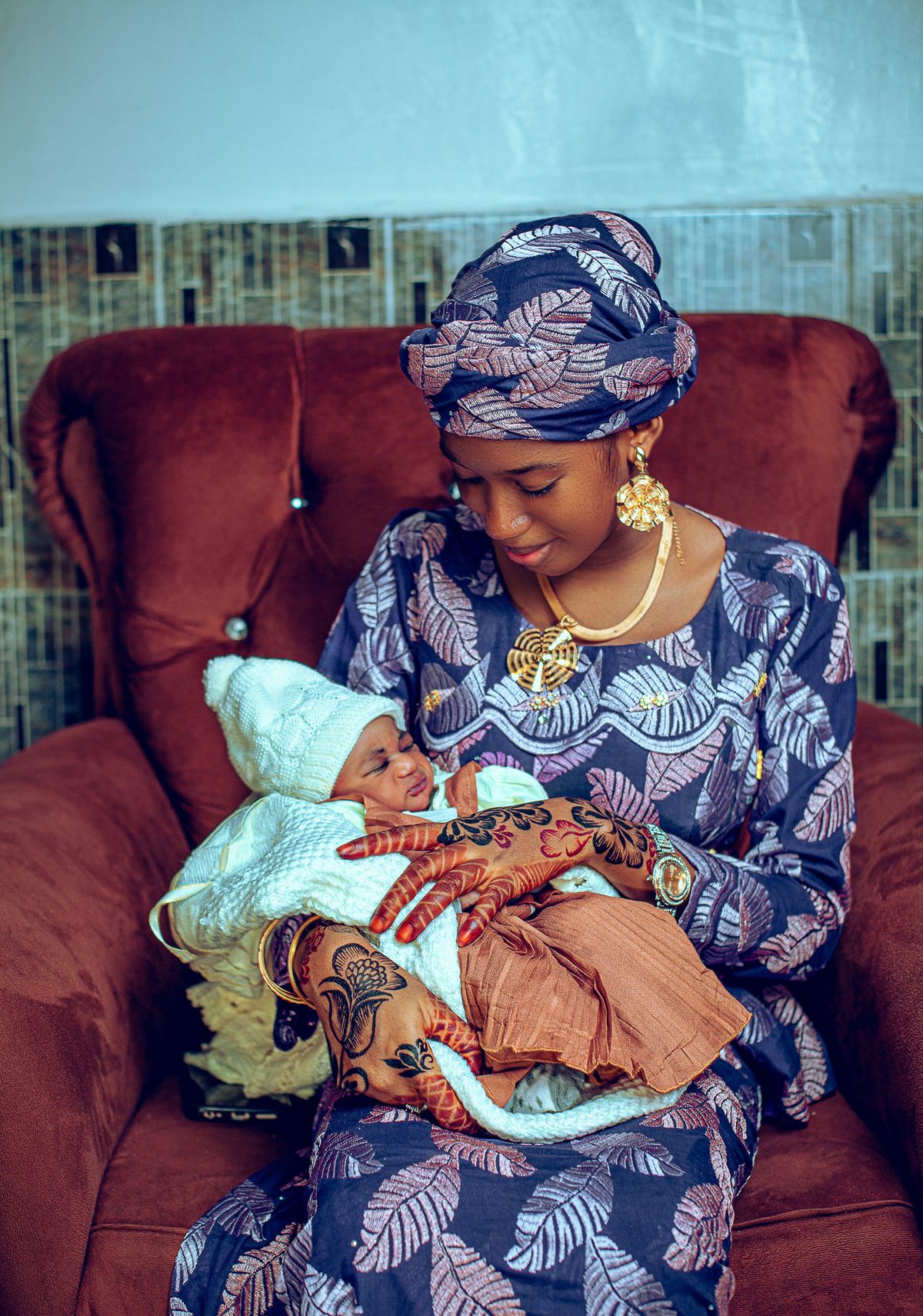
The fields in Dandora were never green. The grass had long surrendered to bare earth, and on dry afternoons the dust rose around the children's ankles as they chased a ball that had been patched more times than anyone could count. One of those children was a girl named Mary Wairimu Macharia, playing barefoot because shoes were for school and church, not for football. Three decades later she would be working in a different kind of room entirely, dimmed and quiet, lined with the soft machinery of a Texas nursery, holding newborns who had never known dust at all.
The distance between those two scenes is the story of a generation of Kenyan women who left, and the story of what it actually costs to arrive.
The Field Where It Started
Dandora sits on the eastern edge of Nairobi, a place better known to outsiders for its landfill than for its football. For the people who grow up there, it is simply home, with all the ordinary ambition that word contains. Macharia's childhood was unremarkable in the way that later proves remarkable: a kid on a dirt pitch, learning to read a game, learning to keep her footing when the ground shifted under her.
That early lesson in adaptability would be tested far from home. Her professional life began modestly, as a brand promoter in Nairobi, the kind of job that teaches a young person how to hold a stranger's attention for the thirty seconds before they walk away. It is unglamorous work. It is also, in retrospect, exactly the apprenticeship her later career would demand.
A Detour Through Doha
Before America, there was the Gulf. Macharia moved to Qatar and entered its hospitality industry, one of the most common entry points for East Africans seeking work abroad. The sector is famously demanding: long shifts, rigid hierarchies, and a service culture that leaves little room for error. For many Kenyans, the Gulf is not a destination so much as a proving ground, a place to earn, to endure, and to save for whatever comes next.
What Doha gave Macharia, by her own account, was discipline. The fast pace and exacting standards forced a kind of professional hardening that would later serve her well. It is a quietly important detail in her story, and in thousands of others like it. The path from Nairobi to the West rarely runs in a straight line. It bends through Riyadh, Dubai, Doha and Abu Dhabi, through years that do not appear on a CV but shape everything that follows.
The Quiet Economy of Newborn Care
In 2017, Macharia relocated to the United States to join her family and settle in Houston. Like most new arrivals, she found the transition harder than the brochures suggest. She speaks candidly about what she calls the diaspora struggle, the exhausting arithmetic of balancing work, motherhood and the loneliness of building a life without the familiar scaffolding of relatives and old friends.
Out of that pressure she built a profession. Today Macharia works as a newborn specialist, caring for infants through the fragile first weeks of life and supporting families during a period that is equal parts joy and exhaustion. It is skilled, intimate labour, and it sits inside one of the least-discussed corners of the diaspora economy. Across American cities, a significant share of caregiving and infant-care work is performed by immigrant women, many of them African, who bring patience and clinical attentiveness to homes that depend on them. The principles Macharia describes are simple and exacting: structure, empathy, and a refusal to compromise on a child's physical safety or emotional wellbeing.
This is the part of the diaspora story that headlines usually miss. For every Kenyan engineer or footballer who breaks into the news, there are far more women holding together households, hospitals and nurseries, their contribution measured in trust rather than salary figures.
Selling Trust: The Diaspora Marketing Economy
Macharia's second career grew out of the first. Alongside her caregiving, she became a sought-after brand ambassador, working with companies that want to reach African audiences abroad. Among her collaborations are the remittance and diaspora-focused apps Taptap Send and Ambia App, businesses built precisely around the financial lifelines that connect Kenyans overseas to families back home.
That work matters more than the word "influencer" might imply. Remittances are one of Kenya's largest sources of foreign exchange, sustained by millions of individual transfers from people exactly like Macharia. The companies that move that money compete fiercely for credibility, and credibility in diaspora communities cannot be bought with billboards. It is earned by people who are themselves trusted, who have lived the long-distance worry of sending money home and getting it there safely. Macharia became one of those people, a bridge between brands and an audience that has learned to be sceptical of promises.
The Awards, and What They Measure
The recognition followed. Macharia has been named Diaspora Influencer of the Year more than once, alongside other honours celebrating her ability to connect brands with African communities and to engage those communities authentically. Diaspora awards can be easy to dismiss from a distance, a circuit of galas and sashes. Up close, they function as something more useful: a way for scattered communities to see themselves reflected, to name their own achievers rather than wait for recognition that rarely comes from the mainstream.
For a woman who started as a brand promoter on Nairobi's streets, the symmetry is hard to miss. The skill was always the same, holding attention, building trust. Only the scale changed.
Lifting as She Climbs
What distinguishes Macharia, in the telling of those who cover her, is that she has refused to treat success as a private possession. She leads her church choir in Houston and supports charitable projects on both sides of the Atlantic, in the United States and back in Kenya. Her advice to younger Kenyans eyeing a life abroad is unfussy: believe in yourself, stay focused, build real networks, and find ways to give back. "Success is not just about personal achievement," she says. "It is also about lifting others as you grow."
That philosophy now shapes her latest project. Macharia is helping promote the eighth edition of Where There's Smoke, a diaspora networking and social gathering set for Dubai on 7 November 2026, designed to bring Kenyans and other members of the diaspora together for an evening built around connection and shared heritage. Organisers have arranged free transport from points across the United Arab Emirates so that distance and logistics do not keep anyone away, a small detail that captures the larger ambition: nobody left out.
From a dusty pitch in Dandora to a nursery in Houston and a stage at diaspora awards, Macharia's journey is not a fairy tale of overnight arrival. It is a record of detours endured and turned to use, a reminder that the most enduring diaspora success stories are usually the ones built quietly, one held newborn and one kept promise at a time.