The Bale and the Border: How East Africa's War on Secondhand Clothes Reaches a Kenyan Warehouse in New Jersey
A regional levy on used clothing is quietly redrawing a billion-dollar trade — and the Kenyan diaspora families who built businesses on it are watching every shilling.
.jpg&w=1920&q=75)
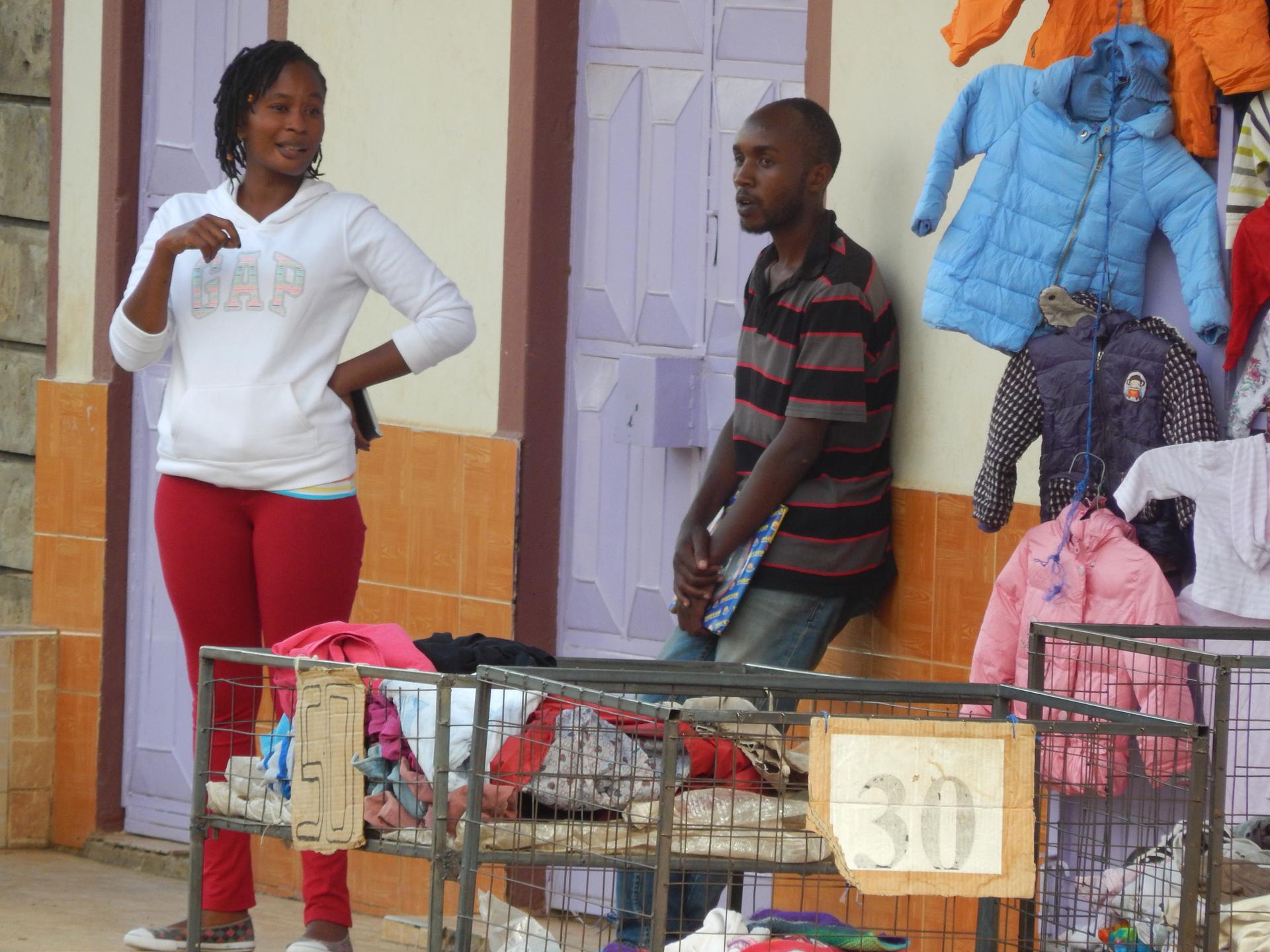
Before dawn in a corner of Gikomba, Nairobi's sprawling secondhand market, the bales arrive the way they have for decades: shrink-wrapped cubes of cotton and denim, hauled off lorries and split open with a knife while the buyers crowd in. A trader who has sold mitumba for twenty years knows the ritual by heart. She pays for a bale sight unseen, cuts the plastic, and gambles that what tumbles out — a winter coat, a child's dress, a barely worn pair of jeans — will be worth more than she paid. On a good morning it is. On a bad one she eats the loss. What she rarely thinks about, as she sorts by feel in the half-light, is that the same bale began its journey thousands of kilometres away, in a warehouse where another Kenyan stands over the same clothes, sorting them the other direction.
That second person is increasingly likely to live in the United States. And a quiet shift in East African trade policy now threatens to disrupt the chain that connects them both.
A levy, not a ban
For nearly a decade, the East African Community — Kenya, Uganda, Tanzania, Rwanda, Burundi and South Sudan — has flirted with shutting the door on imported used clothes. In 2016 the bloc announced plans to raise tariffs and eventually ban the trade outright, arguing that cheap Western castoffs were smothering any chance of a homegrown textile industry. That ambition ran straight into Washington. The United States warned that a ban would violate trade commitments and floated removing East African nations from the African Growth and Opportunity Act, the arrangement that lets them export thousands of products to the American market duty-free. Faced with losing far more than they would gain, most of the bloc blinked.
What has emerged in 2026 is subtler and, for traders, no less consequential. Rather than an outright ban, the policy now leans on price. Reporting from across the region describes a 30 percent environmental levy on used garments layered on top of an existing 35 percent import duty and 18 percent value-added tax — a stack of charges that pushes up the landed cost of every bale before it ever reaches a market stall. The official framing is twofold: protect the environment from textile waste, and nudge consumers toward locally made clothes under the long-running "Buy Kenya, Build Kenya" banner.
Kenya's careful middle path
Kenya has been the most reluctant of the EAC members to wield a hammer. President William Ruto has repeatedly said his government will not ban mitumba, mindful that the trade clothes millions of Kenyans affordably and employs many more. The political arithmetic is unforgiving: the secondhand sector is one of the largest informal employers in the country, sustaining not only the traders who open the bales but the porters, tailors, matatu operators and shopkeepers who orbit them. A clumsy ban would land hardest on the poorest, the very voters any government must answer to.
So Kenya has chosen calibration over prohibition — levies and environmental fees rather than closed borders. The bet is that a textile sector can be coaxed into life at the margins, without pulling the floor out from under the people who depend on imports today. It is a genuinely difficult balance, and one that previous attempts across the region have failed to strike. Rwanda pressed ahead with steep duties years ago and absorbed a painful trade-off with the United States; the lesson was not lost on Nairobi.
The diaspora's stake
This is where the story crosses the Atlantic. The Kenyan diaspora outlet Mwakilishi reports that Kenyan-Americans who have built businesses sorting, baling and exporting secondhand clothing are now watching the policy shift closely, worried about disruption to livelihoods on both ends of the chain. It is a corner of the diaspora economy that rarely makes headlines, overshadowed by the better-known story of remittances. Yet it is real: in warehouses across the American Northeast and Midwest, Kenyan entrepreneurs buy clothing by the ton, grade it, compress it into bales and ship it toward the very markets they once shopped in as children.
The numbers around the trade are large enough to explain the anxiety. East Africa imported substantial volumes of used textiles in 2025 — Kenyan statistics cited by Mwakilishi put the figure near 185,000 metric tons — and the regional secondhand industry has been valued, by figures the outlet attributes to USAID, at roughly a billion dollars a year. Whatever the precise totals, the direction is what matters to a small exporter: every new fee at the Mombasa port narrows the margin that makes the business worth running at all.
AGOA, the lever that cuts both ways
The same trade act that once protected mitumba from a ban now sits at the centre of the diaspora's calculations. AGOA gives Kenya duty-free access to American buyers for more than 6,000 products, and Kenyan officials have been careful to stress that it remains central to the country's export strategy, textiles included. The irony is sharp. The instrument the United States used to discourage a secondhand-clothing ban is also the instrument Kenya hopes will let it grow the domestic garment industry that the ban was meant to protect. For diaspora businesspeople, AGOA is leverage and lifeline at once — a reason the trade survived, and a reminder of how quickly policy in two capitals can reshape a livelihood built in a third.
What comes next
None of this resolves cleanly. A levy can be raised or quietly waived; an environmental fee can become a revenue tool as much as a green one; and the promised local textile jobs take years to materialise, if they materialise at all. For the trader in Gikomba and the exporter in New Jersey, the practical questions are immediate. Will the next bale cost more than the last? Will customers still pay? Is it time to diversify into something the levies do not touch?
Community groups have begun urging diaspora entrepreneurs to engage directly with officials on both sides and to treat the shift as a signal to adapt rather than a verdict to fear. That is sensible advice for an industry that has weathered ban threats before and is still standing. But it does not change the underlying truth this episode exposes: a single fee debated in Nairobi can be felt in a warehouse half a world away, by people who left Kenya yet never quite stopped doing business with home.