The Academy at the Summit: How a Nairobi AI School Could Reshape Kenya's Talent Story at Home and Abroad
Ruto's talks with OpenAI's Sam Altman in France float Nairobi as East Africa's first OpenAI Academy — a bet on keeping tech talent the diaspora knows well.
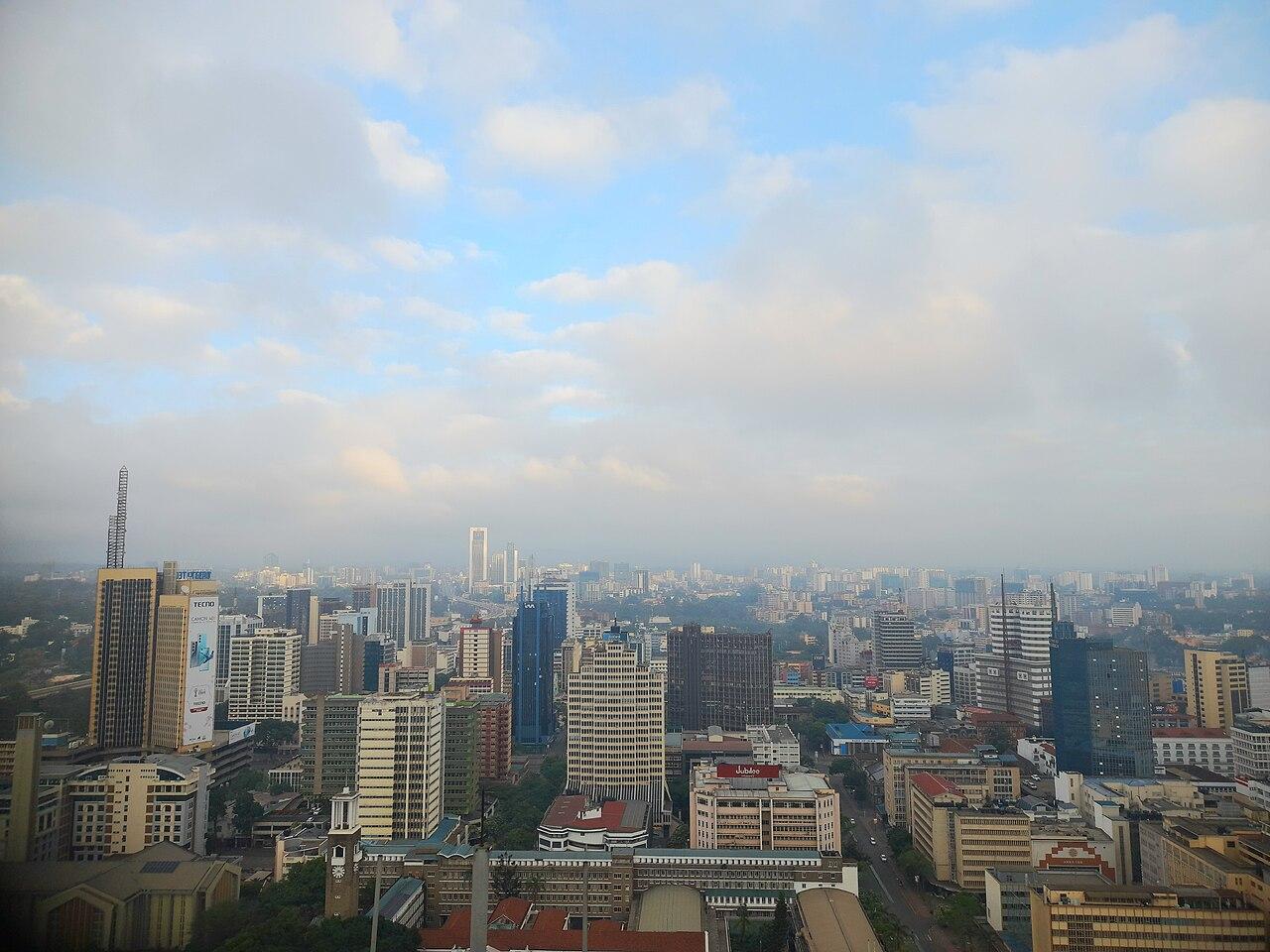
In a co-working space off Nairobi's Ngong Road, the workday for a young software developer often begins the way it ends: with a chat window open to an artificial-intelligence model and a quiet calculation running underneath the code. Will the skills being sharpened here be sold to an employer in Westlands, or to one in San Francisco that never needs the developer to leave the desk? For the many Kenyans who have folded generative AI into their daily routines, that question stopped feeling abstract this week.
On Wednesday, President William Ruto announced from the G7 Leaders' Summit in France that he had held talks with OpenAI chief executive Sam Altman about making Nairobi the home of the first OpenAI Academy initiative in Eastern Africa. The conversation, according to a statement from the President's office, was preliminary, with discussions set to continue. But the ambition was stated plainly, and for a country whose relationship with the global AI industry has been both intimate and uneasy, the proposal landed as something more than a summit photograph.
A Handshake in France, a Promise Aimed at Nairobi
The two men met on the sidelines of the summit, where Ruto has spent the week pressing wealthy nations on African investment and a fairer stake in the technologies reshaping the global economy. In his statement on Wednesday, the President framed the OpenAI discussion as an education project as much as a commercial one.
"We explored potential collaboration through establishing Nairobi as the home of the first OpenAI Academy initiative in Eastern Africa, expanding AI education, strengthening digital skills, supporting educators and learners, and reinforcing Kenya's position as a leading hub for AI talent and innovation," Ruto said.
He added that the engagement was aimed at young people in particular. "I underscored the importance of harnessing emerging technologies to create opportunities for young people, drive innovation and ensure Africa plays a meaningful role in shaping the future digital economy," he said. The OpenAI Academy, where it has been rolled out elsewhere, offers free training, curriculum materials and support for educators rather than a physical campus, which means the proposal is less about a building than about who gets formally taught to build with these tools.
Why Kenya Became the Pitch
The choice of Nairobi is not difficult to read. Kenya already uses these tools at a rate that startles even the companies that make them. According to the July 2025 Global Digital Report by DataReportal and Meltwater, 42.1 per cent of Kenyan internet users aged 16 and above had used ChatGPT in the preceding month — the highest rate recorded anywhere in the world. A country often discussed in terms of what it lacks turns out to lead the planet in everyday adoption of the very product at the centre of the talks.
It would also not be the first academy on the continent. Africa currently hosts one official OpenAI Academy, anchored at the University of Lagos in Nigeria. A second, in Nairobi, would mark East Africa's entry into a small club and would slot neatly into a national story Ruto has told for years, in which Kenya's young, connected population is its principal export and its principal hope. The harder questions are about what the training is for, and who ultimately captures the value it creates.
A Diaspora That Knows This Story Already
Those questions are familiar to the Kenyan diaspora, because so many of its members are the answer to an earlier version of them. Kenyan engineers, data scientists and product managers populate technology firms in California, Washington, London and Toronto, part of a generation that learned to code at home and found that the best-paying customers for those skills sat abroad. Remittances from that workforce have become one of Kenya's most dependable sources of foreign exchange, but the talent behind the money rarely comes home in person.
An AI academy aimed at the next cohort raises an old tension in a new register. Training more Kenyans to a global standard can deepen the pipeline that has long flowed outward, with the most skilled graduates recruited by the same multinational employers whose tools they trained on. Or it can do the opposite, building enough local depth that companies choose to base teams in Nairobi rather than merely hire individuals out of it. Diaspora professionals, who straddle both worlds, are among the few who can see clearly which way a given program is likely to bend.
The Workers Behind the Machine
There is also a less flattering chapter to Kenya's place in the AI economy, and it sits directly beneath the optimism of a presidential statement. OpenAI has previously faced scrutiny over the conditions of outsourced data workers in Kenya, after a substantial share of the human labour required to train ChatGPT and build its safety filters was contracted to workers based in Nairobi.
Some of those data labellers, tasked with reviewing and tagging disturbing content so that automated systems could learn to screen it, have since spoken out about the psychological toll of the work and the thinness of their protections. Their accounts complicate any clean narrative about Kenya "rising" in AI, because they show that the country has already supplied the industry with essential, invisible labour without commensurate recognition. An academy that teaches Kenyans to design systems, rather than only to clean up after them, would be a meaningful shift — but only if the protections for those at the bottom of the supply chain rise alongside the prestige at the top.
From Brain Drain to Brain Gain
For diaspora Kenyans watching from afar, the proposal will be measured against a longer pattern. The country has hosted conferences, signed memoranda and announced hubs before, often with genuine enthusiasm and uneven follow-through. What would make this different is not the name attached to it but the architecture around it: whether graduates find local employers able to pay competitively, whether returning diaspora technologists are courted as mentors and founders, and whether the academy connects to Kenyan firms rather than feeding talent straight into a global recruiting funnel.
The diaspora has a direct stake in that design. Its members are potential teachers, investors and the first customers for Nairobi-built tools, and they are also the clearest evidence of what happens when training outruns opportunity at home. A program that treats them as partners, not just as a cautionary tale, would stand a better chance of turning brain drain into something closer to brain circulation.
What a Photograph Can and Cannot Do
For now, what exists is a conversation and an intention, not a signed agreement or a funded curriculum. The talks are set to continue, and the details that matter most — scale, money, governance and worker protections — remain to be negotiated. A handshake at a summit is a beginning, not a guarantee.
Still, the symbolism is not nothing. A country that leads the world in using these tools, and that has quietly helped build them from cramped Nairobi offices, is asking to be treated as a maker rather than a market. Whether that request is honoured will be judged not in France this week, but in the years ahead, in the careers of the young developers off Ngong Road and in the choices of the diaspora that already knows how this story can go.