Fifty Beds and a Closed Door: Why Kenya's Courts Halted an American Ebola Plan the Diaspora Is Watching
A US-backed quarantine unit for Americans exposed to Ebola has been frozen by Nairobi's High Court, and Kenyans abroad are following every ruling.
In a WhatsApp group that links nurses from Nakuru to night-shift caregivers in Dallas, the message that circulated this week was not a death announcement or a fundraiser. It was a screenshot of a court order. For Kenyan health workers at home and abroad, the news that a judge in Nairobi had frozen a plan to house Americans exposed to Ebola on Kenyan soil was the kind of story that travels fast precisely because so many of them work inside the systems it touches.
On Friday, Health Cabinet Secretary Aden Duale told the country that the government had complied with the court order halting the project at a Laikipia air base. The statement was meant to close a chapter. Instead, it reopened a debate that has been simmering for weeks over who decides what Kenya does with its borders, its hospitals and its sovereignty during a health emergency.
A plan that arrived quietly
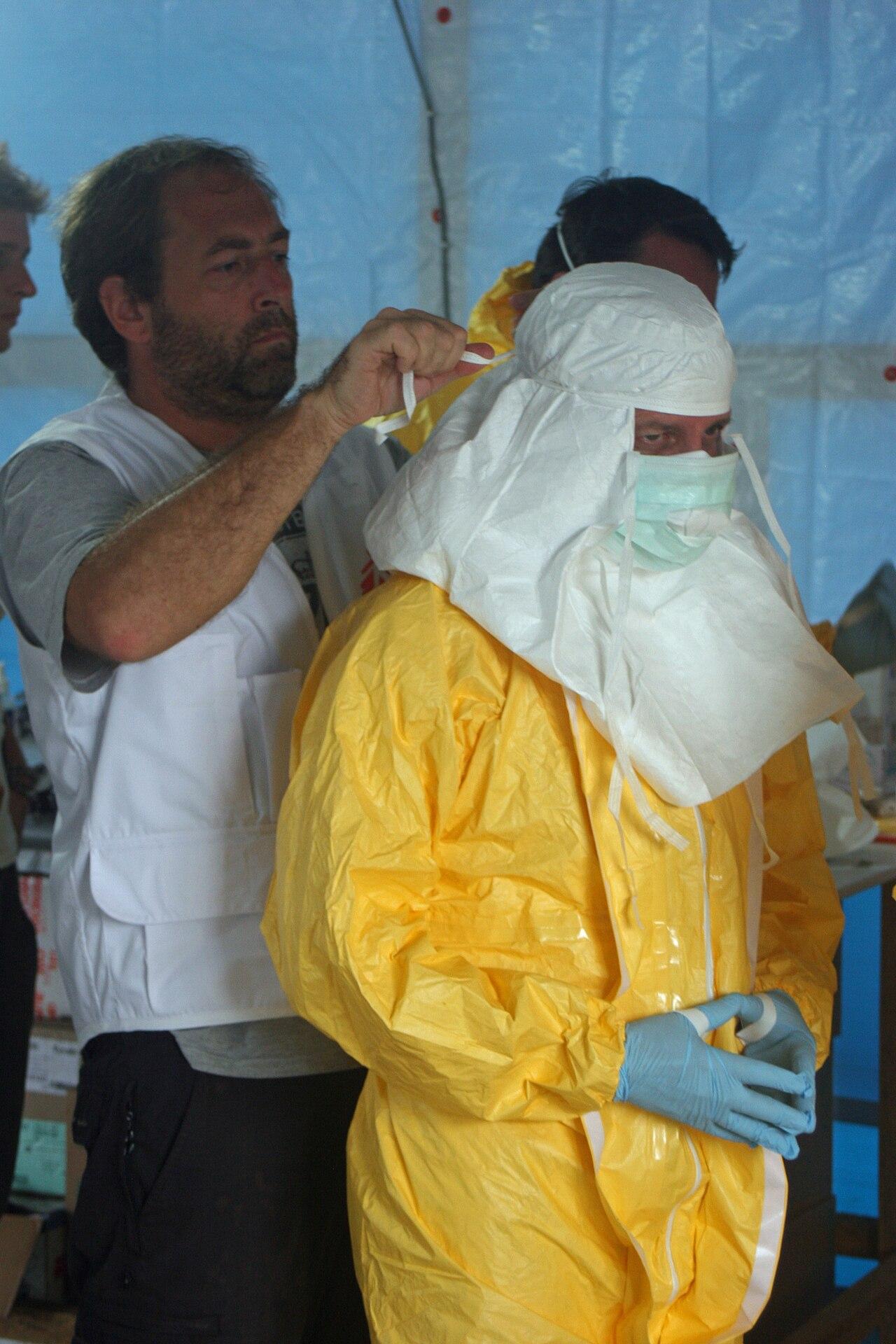
The facility at the centre of the dispute was modest on paper: a fifty-bed unit at a military air base in Laikipia County, intended to receive American nationals who had been exposed to the Ebola virus but were not yet showing symptoms. The logic, as presented, was containment. Rather than fly potentially exposed citizens across continents, the arrangement would hold them for observation closer to where regional outbreaks have flared.
What unsettled many Kenyans was not the medicine but the silence around it. The agreement linking Nairobi to Washington on the project surfaced with few public details, no obvious parliamentary debate, and little of the consultation that Kenyan law expects before the state takes on commitments of this weight. For a country that has spent years building constitutional guardrails around public participation, a quarantine pact negotiated largely out of view struck a nerve.
The court steps in
The legal challenge was filed by the Katiba Institute, a non-profit whose stated mission is to defend the 2010 constitution. Its argument was less about the science of Ebola than about process: that the deal lacked transparency and public participation, and that pushing ahead amounted to what the petitioners called constitutional recklessness with grave implications for public health.
High Court Judge Patricia Nyaundi responded with conservatory orders that went further than many expected. The court barred the government from establishing or operating any Ebola-related quarantine, isolation or treatment facility under agreements with the United States or other foreign governments, and prohibited the admission into Kenya of anyone exposed to or infected with the virus, until the case is heard and determined. A separate strand of the dispute touches on data privacy, raising questions about how the health information of those held in such a facility would be handled and who would have access to it.
By early June, the matter had moved from courtrooms into the streets, with health workers and rights activists staging protests against the facility. The combination of legal restraint and public pressure left the government with little room to proceed, regardless of what had already been agreed.
Why the diaspora is paying attention
For Kenyans living abroad, this is not a distant procedural fight. The diaspora is woven into Kenya's health system in ways that are easy to overlook. Tens of thousands of Kenyan-trained nurses, clinical officers and doctors work in the United States, Britain and the Gulf, and many of them send money home that pays for the very hospitals now caught in the debate. When a question of medical ethics, consent and quarantine arises in Nairobi, it is debated just as fiercely in nursing homes in Maryland and care facilities in Manchester.
There is also a more personal calculation. Diaspora families know what it means to be the ones managing a crisis from afar, coordinating care for relatives by phone and transfer. A facility that would hold foreign nationals under observation, with unsettled rules on privacy and oversight, invites obvious questions: what protections would Kenyan citizens receive in a comparable situation, and what precedent does a foreign-run health enclave set for a public system already stretched thin.
A question of sovereignty as much as health
Beneath the legal language sits a larger argument about agency. Kenya has positioned itself as a regional hub for everything from logistics to diplomacy, and partnerships with wealthier governments are part of that ambition. But the Ebola facility dispute has crystallised a worry that runs through diaspora conversations too: that agreements framed as cooperation can quietly shift the balance of who controls decisions made on Kenyan ground.
Supporters of regional preparedness note that Ebola does not respect borders, and that coordinated containment capacity is exactly what East Africa needs as outbreaks recur. Critics counter that preparedness cannot come at the cost of the constitution, and that public health measures imposed without consent tend to erode the trust they depend on. Both positions have found voice among Kenyans abroad, many of whom have watched how quarantine politics played out in their host countries during recent global health scares.
What compliance now means
Duale's assurance that the government has complied with the court order does not end the case. The conservatory orders remain in force, the substantive hearing is still pending, and the underlying agreement with Washington has neither been published in full nor formally abandoned. Compliance, for now, means pause rather than closure.
For the health workers passing that screenshot between Nakuru and Dallas, the pause is its own kind of message. It signals that the courts can still slow a deal between governments when citizens demand to see the fine print, and that the diaspora's stake in Kenya's health decisions is not merely financial but civic. How the case is finally resolved will say a great deal about how Kenya intends to balance the pull of powerful partners against the protections its own people, at home and scattered across the world, expect it to guard.