The Shift That Ended at Gethsemane: How Minnesota's Kenyan Community Carried Nurse Jessica Omoke Home
Three weeks after a search ended in grief, the Twin Cities' Kenyan diaspora filled a Brooklyn Park church to bury Jessica Omoke — and to hold up the family she left behind.
On Friday morning, the parking lot of The Edge Church in Brooklyn Park, Minnesota, filled early. Some of the cars carried licence plates from neighbouring states; some mourners had flown in from much further away. Inside, family members, hospital colleagues in their own quiet uniform of dark suits, church congregants and members of the Twin Cities' large Kenyan community gathered for a service that many of them had been dreading for three weeks: the funeral of Jessica Omoke, a 51-year-old Kenyan-born nurse, wife and mother of three.
By the afternoon, according to Mwakilishi, she had been laid to rest at Gethsemane Cemetery in the suburb of New Hope, and the mourners had moved on to a repast — the shared meal that, in Kenyan funerals on any continent, marks the moment a community exhales and begins the long work of looking after the living.
A Search That Ended in Maple Grove
Omoke's death was not sudden in the way of an accident announced the same day. It arrived in stages, each one carried through the community's phones. In mid-May she was reported missing, and for days members of Minnesota's Kenyan community joined the search alongside her family. On Friday, May 15, her body was found in Maple Grove, a north-western suburb of Minneapolis, local outlet Bring Me The News reported.
The timing compounded the grief. Her death came the same day her twin daughters graduated — a milestone she had been expected to celebrate that evening, as Kenyan outlet Tuko and CBS Minnesota both noted. A day that should have anchored the family's proudest photographs instead became the date on a coroner's file. Authorities have not publicly announced a cause of death, and the investigation that began in May has continued; this article does not speculate beyond what officials and family have said.
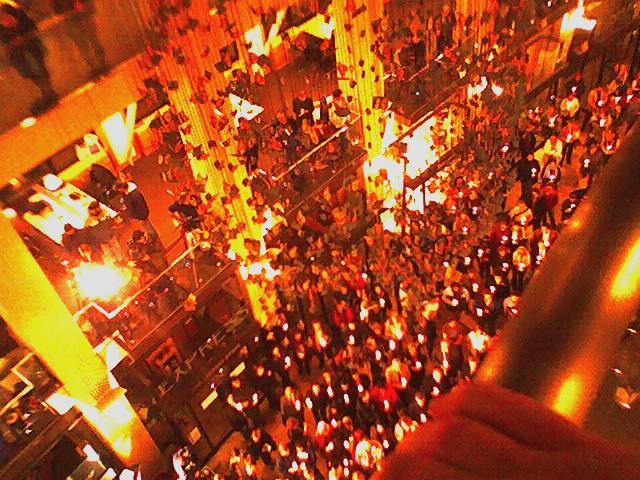
On May 21, hundreds of people stood with candles at a vigil for her, community newspaper Mshale reported, where she was remembered as "a great nurse, a loving mother."
The Nurse From Abbott Northwestern
Omoke worked at Abbott Northwestern Hospital in Minneapolis, one of the largest hospitals in the Upper Midwest. Colleagues quoted across local and diaspora coverage described her the way good nurses are always described — dedicated to patients, steady in hard moments, generous with newer staff — but the consistency of the descriptions, from the vigil to the funeral, suggests this was character rather than eulogy convention.
Her life outside the ward followed a pattern familiar to thousands of Kenyan families in the American Midwest. She was an active member of United Central Seventh-day Adventist Church, where she took part in outreach programmes and mentored younger congregants. She was married to James, and raised three daughters — Rachael, Silvia and Keziah. Faith, shift work and family: the three-legged stool on which a great deal of Kenyan-American life stands.
Minnesota is one of the centres of that life. The Twin Cities host one of the larger Kenyan communities in the United States, with a footprint in health care that is hard to overstate — nurses, nursing assistants, home-care workers and group-home staff who keep the state's hospitals and care facilities running, often on the night shifts. When one of them dies, the loss moves through workplaces, congregations and WhatsApp groups simultaneously, which is why a single funeral in Brooklyn Park drew mourners from across the country.
A Harambee in Dollars
Within days of her death, the community's response took its most traditional form: a fundraiser. A GoFundMe campaign in Omoke's memory was organised by Huldah Momanyi-Hiltsley, the Kenyan-born Minnesota state legislator whose district includes Brooklyn Park, with a target of $60,000 — roughly KSh 7.2 million — to cover funeral costs and support the family. By early this week, local reporting put the total raised at more than $23,000.
The mechanism is American; the instinct is Kenyan. Harambee — the pulling-together that funds school fees, medical bills and funerals back home — has survived the journey across the Atlantic almost intact, only changing its tools. Where a village once passed a tin, a diaspora now passes a link. That a sitting state representative organised the fund says something about how short the distance is, in Minnesota's Kenyan community, between political leadership and neighbourhood mutual aid.
What the Body Does Not Travel For
One detail of Friday's service deserves its own note: Omoke was buried in Minnesota, not in Kenya. For decades, the default for Kenyans who died abroad was repatriation — funds were raised, consulates engaged, and the body flown home to ancestral land. Increasingly, families like Omoke's are choosing burial where their lives are actually rooted: where the husband works, where the daughters graduated, where the church community can visit a grave.
It is a quiet marker of a diaspora maturing in place. Gethsemane Cemetery in New Hope now holds a Kenyan nurse the way cemeteries in Nairobi and Kisii hold generations before her, and the community that filled The Edge Church on Friday will pass that grave on ordinary errands. For many first-generation families, that proximity — the ability to grieve locally — has begun to outweigh the older pull of home soil.
The Family That Remains
The fundraiser's stated purpose looks past the funeral. Beyond burial costs, it is intended to give James and the three daughters financial room in the months ahead — months in which a household built partly on a nurse's income must reorganise itself around her absence.
For the wider community, the work is similar. The searchers of mid-May became the vigil crowd of May 21 and the funeral congregation of June 5; the same names will now appear on meal trains, school-run rosters and the ledger of the GoFundMe. None of it answers the questions that remain open with investigators in Maple Grove. But it answers the question a diaspora always asks itself when one of its own dies far from where she was born: who will stand with the family? On Friday in Brooklyn Park, the answer filled a church.