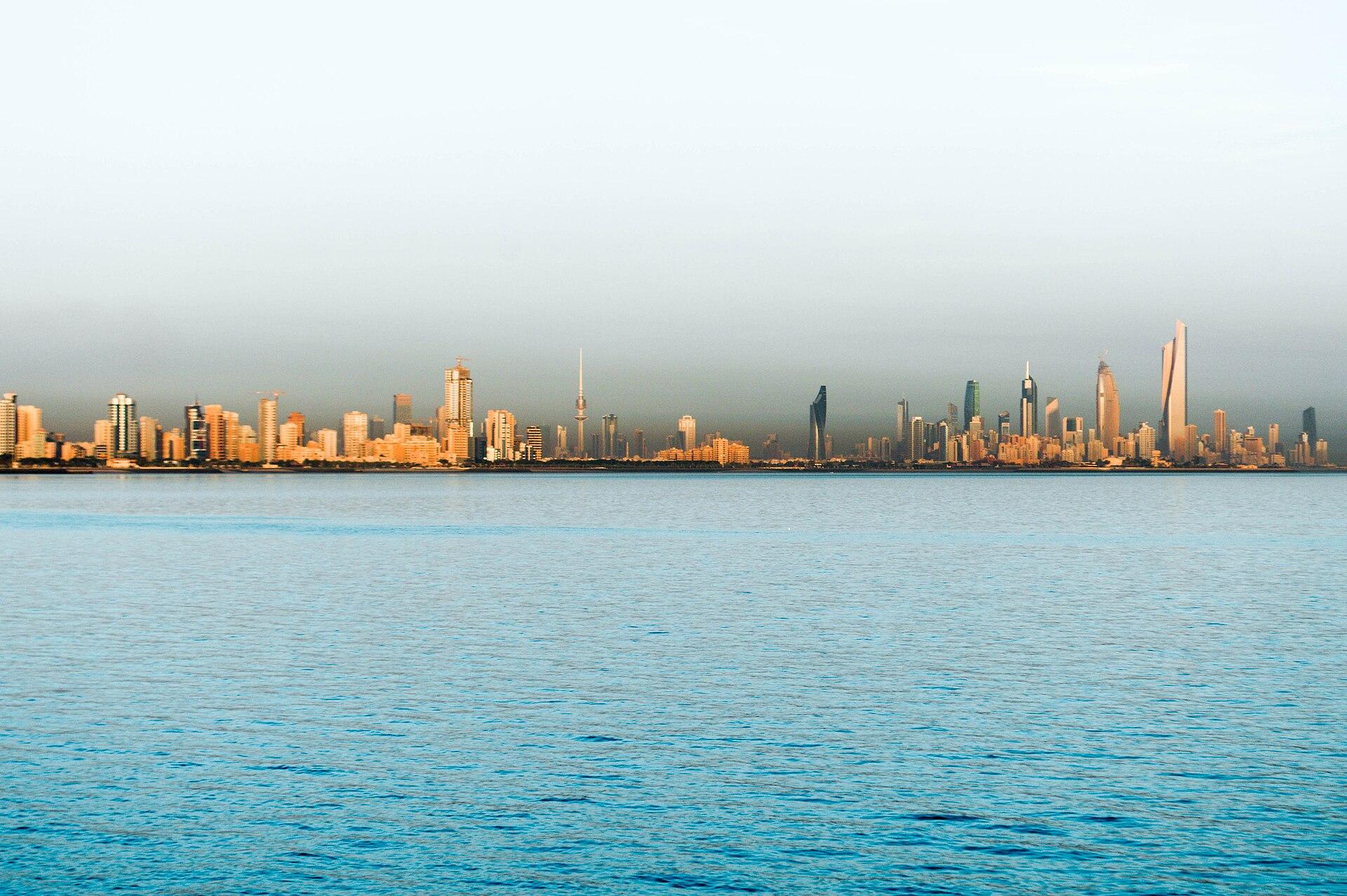
The Paycheck From the Gulf: How a Distant War Is Reaching Kitchen Tables in Kenya
Hundreds of thousands of Kenyans work in Saudi Arabia, the UAE and Qatar. As the US-Israel-Iran war unsettles the Gulf, the money they send home is suddenly in the firing line.

There is a particular kind of arithmetic that happens in a Nairobi kitchen at the end of the month. School fees are due. The landlord wants his rent. A grandmother's prescription is running low. And the figure that decides whether all of it gets paid often arrives the same way it has for years: as a transfer notification on a phone, sent by a daughter in Riyadh, a son in Doha, or a cousin scrubbing floors in an apartment tower in Abu Dhabi.
For hundreds of thousands of Kenyan households, that monthly transfer is not pocket money. It is the budget. And this month, the people who send it are watching a war they did not start creep toward the very corridor their wages travel through.
The Gulf Paycheck, Suddenly Uncertain
The Gulf has become one of the most important workplaces in the Kenyan economy, even though it sits thousands of kilometres from Mombasa. Kenyan nurses, drivers, security guards, construction workers and domestic staff have filled jobs across Saudi Arabia, the United Arab Emirates and Qatar over the past decade, and the money they wire home has grown into a quiet pillar of national finance.
That pillar is now exposed. The continuing conflict that has drawn the United States and Israel into hostilities with Iran has rattled the entire region, and Kenya's central bank has been blunt about the risk. The Central Bank of Kenya estimates that roughly ten percent of the country's annual remittance inflows originate in the Gulf, which means a war that slows Gulf economies, freezes new hiring and disrupts daily life lands, eventually, on a Kenyan kitchen table.
The CBK has already let the uncertainty shape policy. Governor Kamau Thugge confirmed earlier this month that the bank held its benchmark lending rate at 8.75 percent for a second consecutive sitting, citing the unpredictability of the Middle East conflict. "At this stage, it's difficult to say what will happen. We have to wait and see the developments," Thugge said, adding that the hostilities "could seize very quickly" — a hope, not yet a fact.
A Forecast Trimmed in Nairobi
The numbers tell the story in cold figures. At the start of 2026, the central bank expected diaspora remittances to grow about six percent for the year, reaching an estimated 5.42 billion dollars. As the Gulf darkened, it revised that forecast downward by some 40 billion shillings — about 313 million dollars — to roughly 5.1 billion dollars, according to Business Daily Africa. That would be a gain of just 1.4 percent over the 5.04 billion dollars Kenyans sent home in 2025.
It is a modest-sounding adjustment that masks a sharp deceleration. Remittances grew almost 18 percent in 2024. By 2025 that growth had collapsed to under two percent. Monthly inflows hit a record of about 58 billion shillings in March 2026 before slipping again in April, dragging the running total to a multi-month low, according to figures reported by the Kenyan Wallstreet and Businessday. Thugge framed the outlook plainly: the bank expects "a slight deceleration" tied directly to the Gulf's troubles, with possible knock-on effects if a global growth slowdown reaches the larger economies where Kenyans work.
This matters far beyond the balance of payments spreadsheets. Diaspora remittances are now Kenya's single largest source of foreign exchange, ahead of tourism receipts and even the country's celebrated tea and horticulture exports. When the Gulf sneezes, the shilling feels it.
Saudi Arabia's Quiet Squeeze
The war is the headline, but it is not the only pressure on the Gulf paycheck. Saudi Arabia, long the second-largest source of Kenyan remittances after the United States, has been tightening the screws for over a year in ways that have little to do with missiles.
The kingdom began enforcing a 15 percent value-added tax on transaction services, a change that quietly raises the cost every time a worker sends money home. It also overhauled its labour market. From June 2025, Saudi Arabia replaced its old one-size-fits-all residency permit, the iqama, with a skill-based framework that sorts foreign workers into three tiers — highly skilled, skilled and basic — according to qualifications, experience and wage. Most Kenyans in the kingdom fall into the basic tier, the category covering entry-level and manual jobs, where roles are capped at age 60 and bargaining power is thin.
The combined effect has been visible in the data. Inflows from Saudi Arabia fell by just over 25 percent in 2025, dropping to about 302 million dollars from 403 million the year before. For the families on the receiving end, those percentages are felt as a smaller transfer, a delayed payment, or a difficult phone call explaining why this month will be tight.
What the Diaspora Still Carries
It would be wrong to read the Gulf's troubles as the whole picture. The United States remains by far the largest source of Kenyan remittance dollars, accounting for 54.2 percent of total flows in 2025 — about 2.73 billion dollars. The diaspora in North America and Europe continues to be the backbone of the system, and a steadier shilling, trading in a narrow band between 129 and 130 to the dollar, has cushioned some of the shock for households doing their sums.
But the Gulf workers occupy a particular place in Kenya's diaspora story. Many travelled on labour contracts, took on hard and sometimes precarious jobs, and send a larger share of their earnings home than almost anyone. They are the ones for whom a regional war is not an abstraction on the evening news but a question about whether the next contract gets renewed, whether the agency still has placements, whether the money still moves. Their exposure is exactly why the central bank singled out the corridor for caution.
The Wait for De-escalation
For now, the story hangs on a single uncertain hope: that the fighting stops soon. There has been cautious talk of a deal to wind down hostilities and reopen the Strait of Hormuz, the chokepoint through which a vast share of the world's oil — and the Gulf's economic confidence — passes. Global oil markets are watching it closely, and so, less visibly, are Kenyan families.
A quick resolution would let the central bank's softer inflation outlook hold; Kenyan inflation already climbed to 6.7 percent in May, its highest in more than two years, pushed up by fuel and energy prices. A prolonged war would do the opposite, squeezing the Gulf paycheck further at a time when households back home have little slack left.
The Kenyans wiring money out of Riyadh and Doha cannot end a war. What they can do is what they have always done — keep sending what they can, for as long as they can. Whether that is enough this year will be decided not in any Nairobi kitchen, but in a region holding its breath several thousand kilometres away.