The Long Phone Call Home: How Eid ul-Adha 2026 Will Cross from Mombasa to Manchester, Dubai and Beyond
Kenya's Interior CS gazetted Wednesday a public holiday for Eid ul-Adha. For Muslim Kenyans scattered across the Gulf, the UK and North America, that single line in the Gazette resets a week of routines.
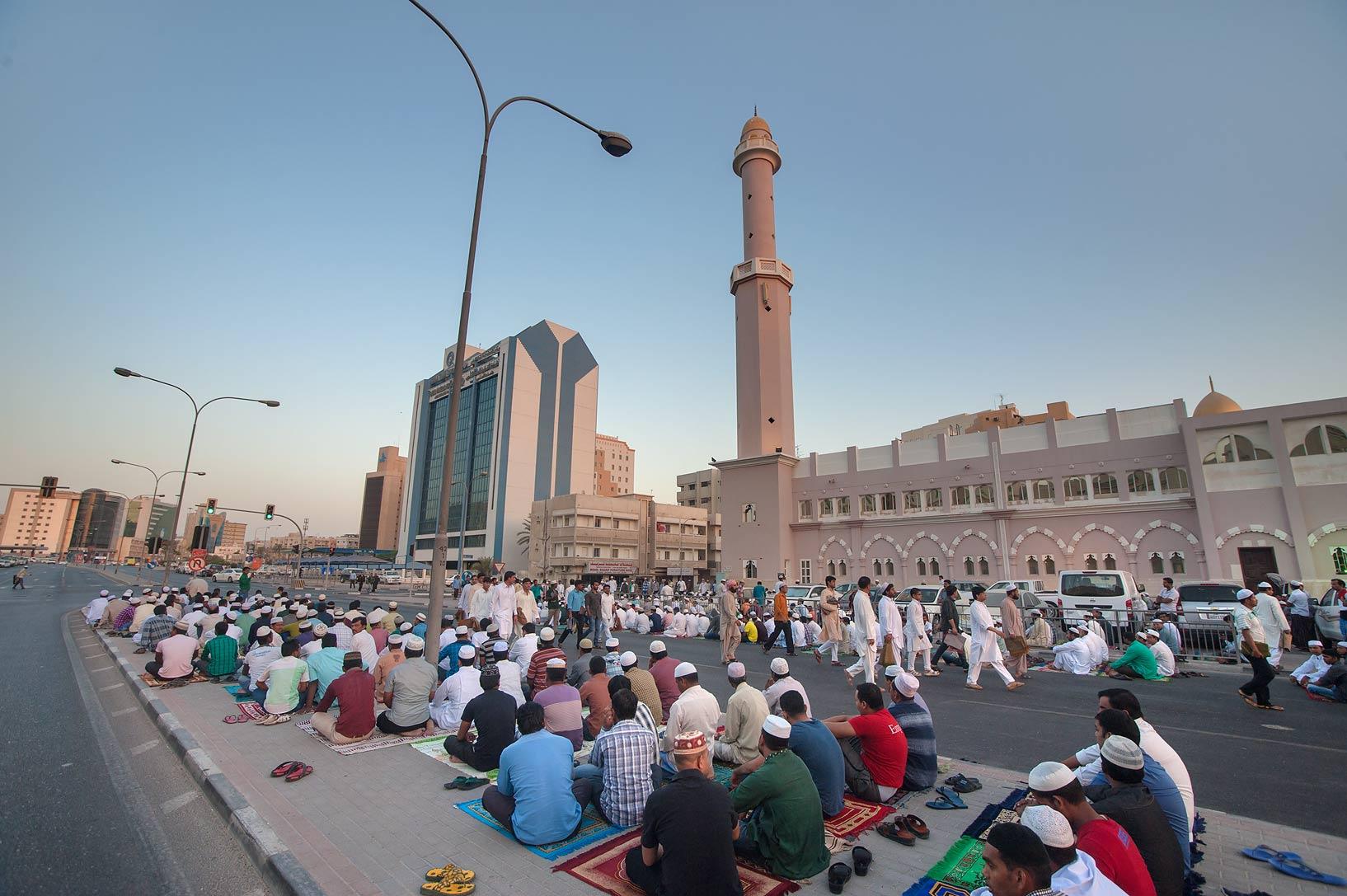
Mombasa's Old Town has been moving in a particular way all weekend. The butcher on Nyali Bridge is taking deposits for sheep. The barber on Mwembe Tayari has stayed open later than usual. The aunties on Mama Ngina Drive have been pricing imported dates and counting how many cousins are flying in from the Gulf this year. By Tuesday morning, Mombasa already knows what the Nairobi Gazette has only just confirmed: Wednesday belongs to Eid.
On Sunday evening, Interior Cabinet Secretary Kipchumba Murkomen signed a one-line declaration that landed on the wires by Monday morning. Wednesday, 27 May 2026, would be observed as a public holiday across Kenya, in keeping with Eid ul-Adha, the Festival of Sacrifice. For a country with a sizeable Muslim minority, and one of Africa's longest-running coastal Muslim communities, the declaration is procedural. For the millions of Kenyans living outside the country's borders, it is something else — a synchronising signal that resets a week of phone calls, money transfers and quietly contested travel plans.
A one-line Gazette
Eid ul-Adha is the second of Islam's two major annual festivals, marking the willingness of the Prophet Ibrahim to sacrifice his son in obedience to God. The day is observed across the Muslim world with congregational prayers held early in the morning, the act of Qurbani — the ritual slaughter of a sheep, goat or cow — and the distribution of one-third of the meat to the poor, one-third to family, and one-third for the household.
Kenya does not, formally, set the date in advance. The Chief Kadhi follows the lunar sighting of the moon, which is why the holiday tends to be confirmed only days before. Murkomen's Sunday-night gazette notice followed exactly that pattern, and was carried within hours by Citizen Digital, Capital FM, the Standard, Tuko and the Daily Nation. By Monday afternoon, the news had reached Kenyan workers' WhatsApp groups in Doha, Dubai, Riyadh and Manama, where the day-by-day rhythm of Kenyan public holidays still matters even at a distance.
The sheep, the sacrifice, the bill
Inside Mombasa County, Lamu and parts of Nairobi's Eastleigh and South C, the most visible Eid expense is the animal. A local sheep is going for between fifteen thousand and twenty-two thousand Kenyan shillings this week, depending on weight and condition. A goat costs slightly less. A share in a cow — seven households typically combine to slaughter one — runs to roughly twelve thousand shillings per share. For households running on stretched 2026 budgets, that figure is meaningful, and many Kenyan Muslim families have started doing the Qurbani only every other year, or pooling between cousins.
The diaspora helps where it can. Several Kenyan Islamic charities and mosque committees now run online Qurbani schemes: a relative working in Saudi Arabia or the United Kingdom can pay a fixed amount to the mosque, which buys the animal, slaughters it on Eid morning at home in Kenya, and distributes the meat to designated families. The going rate this year, mosque officials say privately, is in the region of eighteen thousand shillings for a sheep package, with an additional small administration fee.
The Kenyan diaspora's Eid economics are not, however, a one-way transfer. Many Kenyan families abroad receive small Eid gifts from home: ribbon-wrapped halwa from Lamu, kanga prints from Mombasa, sometimes simply a long voice note from a grandmother saying she has prayed for them. The exchange runs in both directions, and a public holiday in Kenya gives the senders enough quiet to record it.
From Likoni to Lambeth
The largest single concentrations of Kenyan Muslims abroad live in the Gulf — particularly the United Arab Emirates, Saudi Arabia and Qatar — and in the United Kingdom, especially in the London boroughs of Lambeth, Lewisham and parts of Manchester. Smaller but growing communities live in the United States, in cities such as Minneapolis, Seattle and Atlanta.
In the Gulf, the Eid holiday is gazetted separately by each host government, which typically means three to four consecutive days off for residents, Kenyan workers included. For domestic workers and construction labourers, however, the holiday can be more theoretical than real. Employers vary, and the kafala-linked work regime in some Gulf states still leaves workers dependent on their employer's goodwill for time off. Kenyan community welfare officers in the UAE say the volume of Eid-week distress calls — from workers asked to skip prayers, from families who cannot reach a relative, from women asked to cook through Eid for the employer's household — rises in the days leading up to the festival.
The picture in the UK is different. Wednesday is a regular working day in Britain; Eid ul-Adha is not a national public holiday there. Kenyan Muslim communities in London and Manchester typically negotiate the morning off, attend prayer at one of the larger mosques, and host evening gatherings that begin only after the school run. The arithmetic for these families is logistical: prayer time, packed lunches, a chicken in the oven, a phone call to Mombasa pressed in between.
In North America, the rhythm depends almost entirely on the workplace. Some Kenyan-American families have built a tradition of taking Eid as a floating leave day. Others quietly fold the celebration into a Saturday gathering at a local mosque the weekend after.
A week without WhatsApp silence
For all the formal differences between hosts, the one thing this Wednesday will do is open the lines. Kenyan diaspora families know the rhythm of a public holiday at home. The grandmothers will be free to record voice notes. The cousins will be off school. The phone signal in coastal towns will hold up better than usual. The mosque in Nairobi's South B will likely livestream the morning prayer, and within an hour, the link will be shared across Kenyan Muslim WhatsApp groups in eight time zones.
Murkomen's notice, in other words, will be read by far more people than ever set foot in a Kenyan polling station. For the diaspora, that is what a Kenya Gazette decision now does. It tells them when, exactly, to call home.