The Letter From Foggy Bottom: How a Quiet US Sanction Drew a Red Line Around the Torture of a Kenyan Activist in Dar es Salaam
Marco Rubio's designation of a Tanzanian police commissioner sends an unusual signal to East Africa — that Washington is watching how its allies handle activists who cross borders.
It was still dark in Dar es Salaam when the men first came to his hotel room. Boniface Mwangi had travelled the short distance from Nairobi to observe a treason trial; instead, he later told reporters, he found himself stripped, hung upside down, and assaulted with foreign objects in a cell whose location he could not name. A year later, on a Thursday evening in Washington, a single line on US State Department letterhead has done what East African civil society had spent months demanding. It has named one of the men he says was responsible.
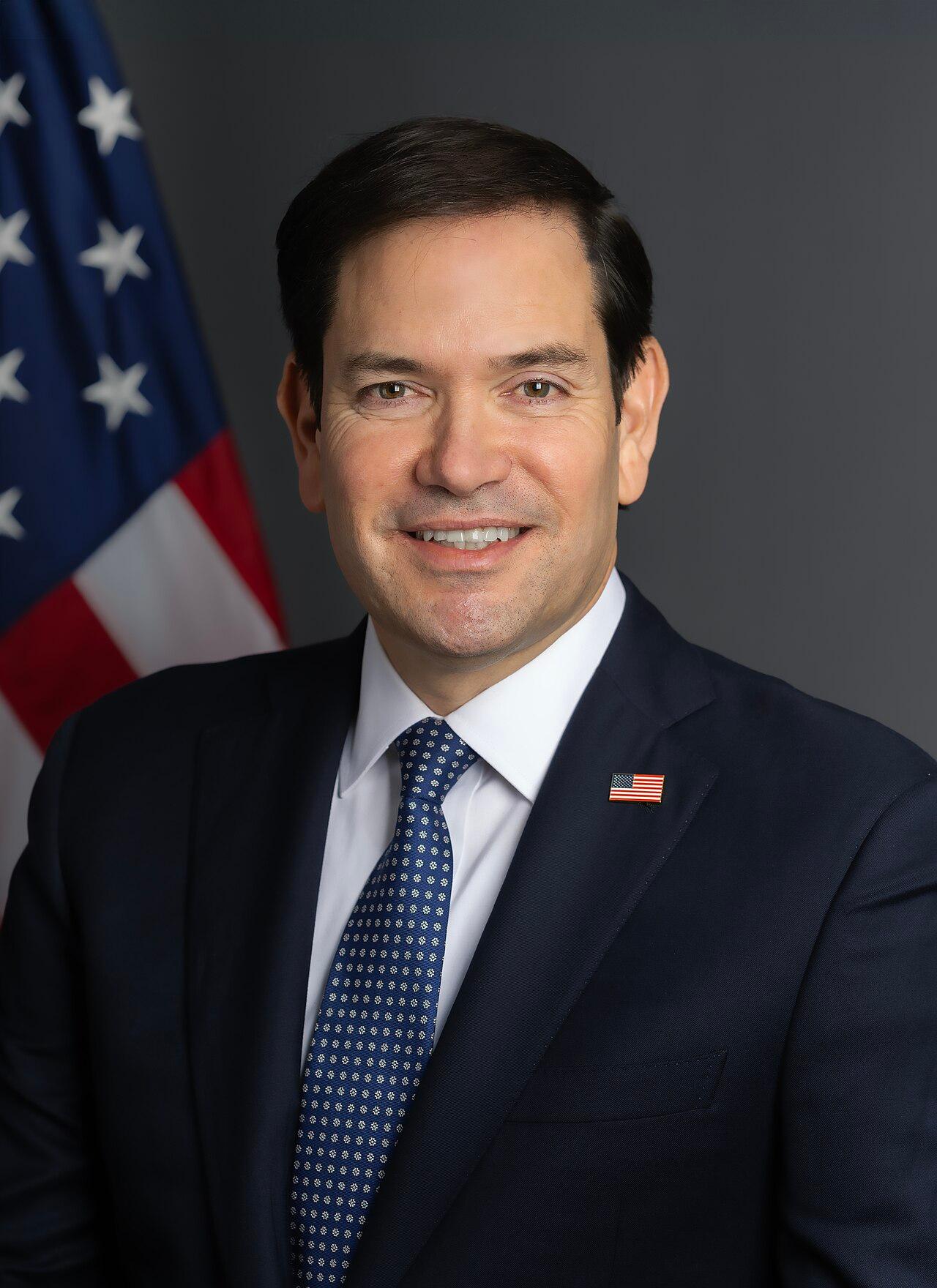
In a brief statement issued on May 21, US Secretary of State Marco Rubio announced that Senior Assistant Commissioner Faustine Jackson Mafwele of the Tanzanian Police Force has been designated under Section 7031(c) of the State Department's appropriations law, a provision that bars from entering the United States any foreign official credibly linked to gross human rights violations. The designation extends to Mafwele's immediate family. It does not freeze any of his assets. It is a quiet sanction, the kind that does not move markets. But for the Kenyan activists, journalists, and lawyers who have spent the last twelve months trying to understand what happened to Mwangi and his Ugandan counterpart Agather Atuhaire, it is the first time a foreign government has put a name to the silence.
A detention that crossed three borders
Mwangi, a Kenyan photojournalist and protest organiser known for confronting his own government over corruption and police brutality, had travelled to Dar es Salaam in May 2025 to observe court proceedings involving Tanzanian opposition leader Tundu Lissu, who is on trial for treason. Atuhaire, a Ugandan journalist and activist, was there for the same reason. Both were detained shortly after they arrived. According to the account they gave at a press briefing on June 2, 2025, they were held incommunicado for several days, beaten, sexually assaulted, and finally deported overland in separate directions — Mwangi back into Kenya through Horohoro, Atuhaire into Uganda through Mutukula.
In his account, Mwangi described unknown men arriving at his hotel before dawn, knocking on his door and demanding he come with them. He refused, barricading himself in his room until daylight, even after they identified themselves as police. By the time he tried to leave the building, a larger group had assembled. He was taken to an immigration office, photographed, fingerprinted, and stripped of his phone. Lawyers from the Tanganyika Law Society who arrived to represent him were turned away. Kenya's ambassador to Tanzania, Isaac Njenga, tried to intervene and was rebuffed.
It is the kind of story that ordinarily fades. Cross-border detentions are common in the East African Community. Most are eventually settled with a deportation and a press release, and the activists move on. What made this case different was the specificity of Mwangi's allegations and the public way he chose to tell them. Within hours of his return to Nairobi, he was on social media. Within days, he and Atuhaire were standing in front of cameras describing the assaults in clinical detail. Rights groups in both countries demanded inquiries. Tanzanian authorities offered none.
What Section 7031(c) actually does
The mechanism Rubio used on Wednesday is small, technical, and surprisingly old. Tucked inside the foreign-operations appropriations bill that Congress passes each year, Section 7031(c) gives the Secretary of State the power to declare any foreign official, and members of their family, ineligible for a US visa if there is credible evidence of gross violations of human rights. The State Department maintains a list. Sometimes the names are made public; sometimes they are not.
Visa bans look modest on paper. They do not seize bank accounts. They do not stop a designated official from doing their job at home. They cannot extradite anyone. What they do, however, is create a paper trail in the world's most consequential travel and banking compliance systems — an entry in databases that follow officials when they try to send their children to American universities, when they apply for transit visas to Europe, when their names are screened by correspondent banks. It is a sanction calibrated for a long time horizon.
For Kenyans watching the announcement from Nairobi and from cities further afield, the timing is itself a signal. Section 7031(c) designations are uncommon for East African officials. They are rarer still when the victims are not American citizens.
Why the diaspora is watching
Mwangi has spent the last decade as one of the most visible figures bridging Kenya at home and Kenya abroad. His photographs of post-election violence travelled through diaspora WhatsApp groups long before they reached mainstream Kenyan television. His campaigns against extrajudicial killings have been amplified by Kenyan students in the United States, by professionals in the Gulf, by community organisers in Britain. When he was detained in Tanzania a year ago, the first fundraisers for his legal costs went up from Maryland and Boston. When his account of the torture went public, the loudest demands for accountability came from diaspora platforms.
That same diaspora is now reading Rubio's statement carefully. For Kenyans who have spent years asking whether the United States cares enough about East African civil society to act, the answer this week was a qualified yes — qualified because the action is narrow, qualified because it took a year, but an answer all the same. The designation does not fix Tanzania's silence. It does not return the year that Mwangi has lost to medical treatment, therapy, and litigation. But it ends a particular kind of impunity: the assumption that nothing further will happen.
The East African Court of Justice, still waiting
The US move arrives while a parallel case is moving slowly through the East African Court of Justice in Arusha. On July 18, 2025, Mwangi and Atuhaire filed a petition against the Tanzanian government seeking at least one million US dollars each — about 129 million Kenyan shillings — for what their lawyers described as enforced disappearance, torture, sexual violence, arbitrary detention, and unlawful deportation. That case has yet to be decided.
For now, the regional court is the only venue in which a verdict will carry the binding force of judgment, since US visa bans are administrative and Tanzanian courts have not entertained the activists' complaints. But the Arusha case has had its own friction. Hearings have been postponed. Service of process has been contested. Diplomatic discomfort has occasionally crept into the docket. A US designation may not move the East African court, but it does add weight to the basic factual claim at the centre of the case: that an identifiable officer, in an identifiable command structure, did something the world should not forget.
What comes next
Tanzania has not responded publicly to the designation. In the past, Dar es Salaam has dismissed Western human rights actions as interference, and a similar response in the coming days would not surprise observers in either capital. The political question for Nairobi is more delicate. Kenya and Tanzania share a long border, a customs union, a difficult history of trade disputes, and a shared interest in keeping their relationship functional. President William Ruto's government has so far said little about Mwangi's case beyond confirming its ambassador's attempts to intervene.
The Kenyan diaspora, watching from a distance, has fewer constraints. By Thursday evening in Nairobi — which was Thursday morning in Atlanta, Wednesday night in Toronto — the news had already begun to spread through the kinds of channels it usually does: a Facebook post here, a tweet there, a thread on the Kenyans-in-Houston group. The first message most people read was the same single sentence. The United States knows who did this. The United States has said his name.