The Battery That Buys Back the Day: How a Chinese Giant and a Homegrown Builder Are Racing to Electrify the Diaspora's Favourite Investment
In one Nairobi week, Yadea's Kenya debut and Kibo Africa's 10,000-bike pledge rewrite the running costs of the boda boda — the machine remittances built.
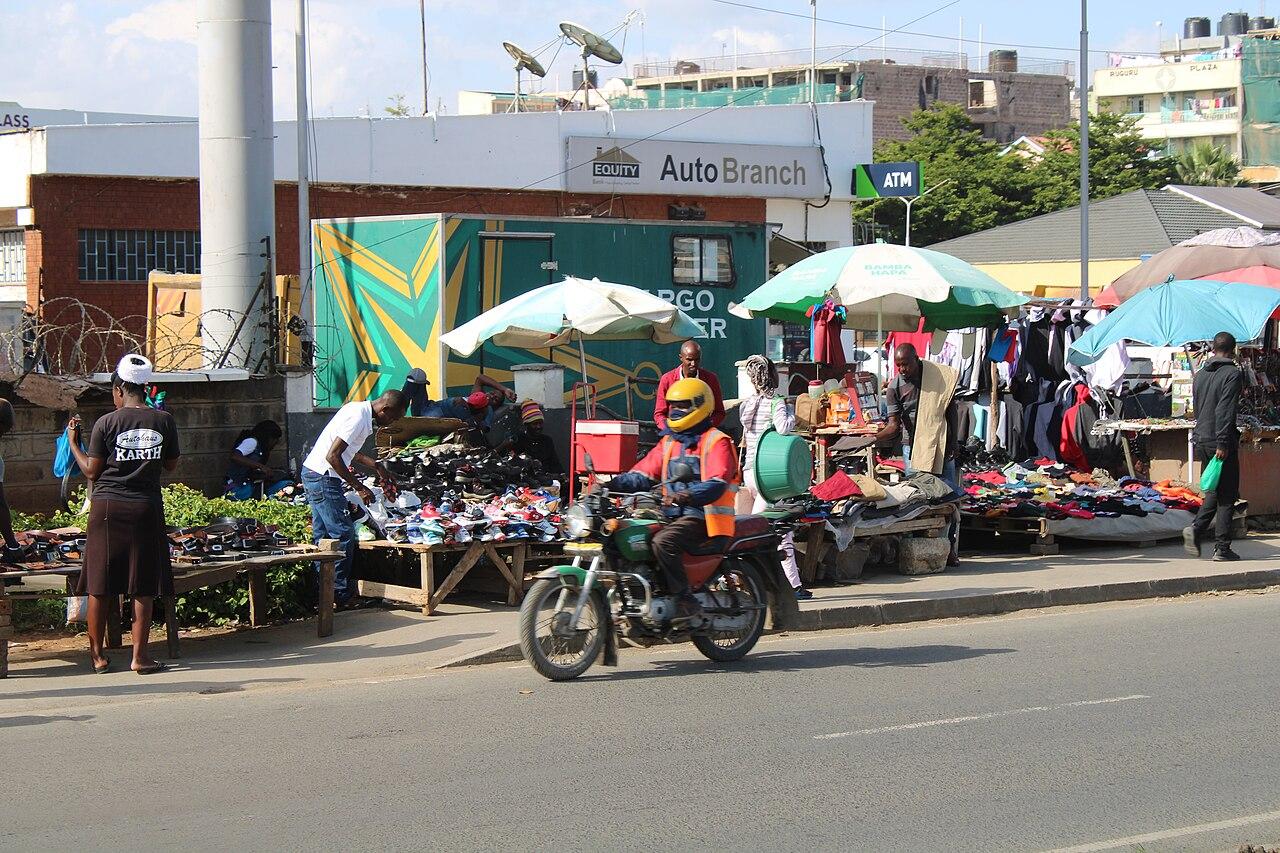
On the exhibition floor of Autoexpo Kenya 2026 in Nairobi this week, the machine drawing the longest queues was not a saloon car or a pickup. It was a motorcycle with no fuel tank at all: the KIFA, an electric two-wheeler built for the boda boda trade, unveiled by Yadea — the largest electric two-wheeler manufacturer in the world. A few kilometres away, and barely a day apart, Kenyan manufacturer Kibo Africa stood beside energy company Powerhive and made a promise of its own: ten thousand electric motorcycles on Kenyan roads within twelve months.
Two announcements in a single Nairobi week would be easy to dismiss as trade-fair theatre. But for the millions of Kenyan families whose daily income arrives on two wheels — and for the relatives abroad whose remittances bought those wheels in the first place — the timing matters. Kenya's fuel prices are the highest in the region, inflation has climbed to 6.7 percent on the back of fuel and food costs, and households are cutting spending to cope. Into that squeeze, two very different companies are now selling the same idea: that the most important number on a boda boda is no longer the price of a litre of petrol.
The Giant on the Showroom Floor
Yadea's arrival is not a tentative one. Founded in 2001, the company has grown into the world's biggest maker of electric two-wheelers by sales volume, with ten manufacturing bases and more than 100 million users across over 100 countries. It entered Africa through Morocco in 2023 and now has partnerships in more than twenty countries on the continent. Kenya, the company says, is its second East African market after Ethiopia — where it has sold more than 48,000 electric motorcycles in three years.
The KIFA, the model Yadea chose for its Kenyan debut, reads like a design brief written by a boda boda rider. It carries a payload of up to 250 kilogrammes. It runs on dual removable 72V lithium iron phosphate batteries with a range of up to 150 kilometres. And it supports battery swapping — a depleted battery can be exchanged for a charged one in about thirty seconds, which matters in a trade where an idle motorcycle earns nothing.
"Following our success in Ethiopia, where we have sold more than 48,000 units in the last three years, we are confident that our electric mobility solutions will meet the growing demand for sustainable transportation in Kenya and across East Africa," Yadea's East Africa market director John Zhang said at the launch, according to Capital FM. To build out the swapping network, Yadea is partnering with ARC Ride, a battery-swapping company already operating in Nairobi.
A Homegrown Answer, Ten Thousand Strong
If Yadea is the multinational heavyweight, Kibo Africa is the local contender that has been quietly preparing for this moment. The Kenyan manufacturer says it has spent three years testing electric motorcycles on local roads before committing to commercial deployment. This week, at the launch of its Kibo Spark model, the company signed a memorandum of understanding with Powerhive — an energy firm that has run mini-grid projects in Kenya for more than a decade — to build the battery-swapping infrastructure the fleet will need.
"We plan to launch around 10,000 bikes in the next 12 months in the market," Kibo Africa director Felix Mulwa told reporters, adding that deployment would begin in Nairobi before spreading to other regions. The longer-term ambition is larger still: about 30,000 electric motorcycles within three years. Powerhive chief executive Christopher Hornor framed the partnership in continental terms: "We're committed to building the energy infrastructure layer all over Africa, starting in Kenya."
The Arithmetic of a Litre of Petrol
The pitch to riders is not environmental. It is arithmetic. According to Mulwa, a rider switching from petrol to electric can save around Sh500 to Sh600 every day at current fuel prices. Reporting by Tuko puts the cost of Kibo's swap plan at a flat Sh450 a day for unlimited battery exchanges — a fixed cost in a trade where the petrol pump has become the most unpredictable line in the budget.
Those numbers land in a particular economic moment. The energy regulator's latest review left Kenyan fuel prices the highest in the region, with diesel in neighbouring Uganda retailing nearly 28 percent cheaper. The Kenya Revenue Authority has forgone Sh9.1 billion in taxes to cushion consumers from the surge, and a planned fuel price strike was only called off after talks with President Ruto. A recent consumer report found Kenyan households actively slashing spending as transport costs bite. For a boda boda operator, the difference between Sh600 saved and Sh600 spent each day is the difference between an income and a treadmill.
The Machine That Remittances Built
Why should a Kenyan in Dallas, Doha or Dagenham care about a motorcycle launch in Nairobi? Because the boda boda is, for many diaspora families, the single most common investment that remittance money makes. By Central Bank of Kenya counts, Kenyans abroad send home more than four billion dollars a year, and a sizeable share of it goes not to consumption but to small income-generating assets — a plot, a shop, and very often a motorcycle that puts a brother, a cousin or a son into business.
The economics of that investment have been deteriorating in plain sight. Every fuel price review has shaved the daily margin a sponsored rider can send back or keep. An electric motorcycle changes the equation that diaspora sponsors run in their heads: a predictable Sh450-a-day energy cost instead of a volatile petrol bill, fewer moving parts to maintain, and a machine whose running costs do not import inflation from global oil markets. For the relative abroad weighing whether to finance a bike, the question is shifting from "petrol or nothing" to "petrol or electric."
What Addis Ababa Already Knows
Kenya is not the test case; Ethiopia is. Yadea's 48,000 motorcycles there in three years — sold in a country that has moved aggressively to restrict petrol vehicle imports — are the proof of concept the company is carrying south. East Africa's diasporas talk to each other, and the Ethiopian experience has already seeded a narrative familiar to Kenyans abroad: that electrification of the continent's commercial two-wheelers is not a green dream but a unit-economics story, driven by fuel prices rather than policy speeches. TechCabal notes that more than 90 percent of Yadea's $5.4 billion in 2025 revenue still comes from China — Africa is where the company is hunting its next growth story, and East Africa is the front line.
The Road Ahead
None of this makes the transition automatic. Swap stations are still concentrated in Nairobi; a rider in Kakamega or Kilifi cannot yet trade a battery in thirty seconds. Upfront prices for electric models remain a hurdle for buyers without financing, and the used-bike market that absorbs so much diaspora money has no electric equivalent yet. The competition now forming — a Chinese giant with global scale against a local builder with three years of Kenyan road data — will decide how fast those gaps close.
But the direction is set, and it was set this week, in public, twice. For the diaspora wallet that has quietly capitalised Kenya's boda boda economy for two decades, the most consequential technology story of the year may turn out to be a battery the size of a briefcase.