The Activation Switch: How Kenya's Phone Tax Overhaul Could Reshape What the Diaspora Spends to Stay Connected
A Treasury proposal to collapse five overlapping phone levies into a single 25% activation duty could cut a typical smartphone by nearly KSh 6,000 — quietly changing the maths of diaspora remittances home.

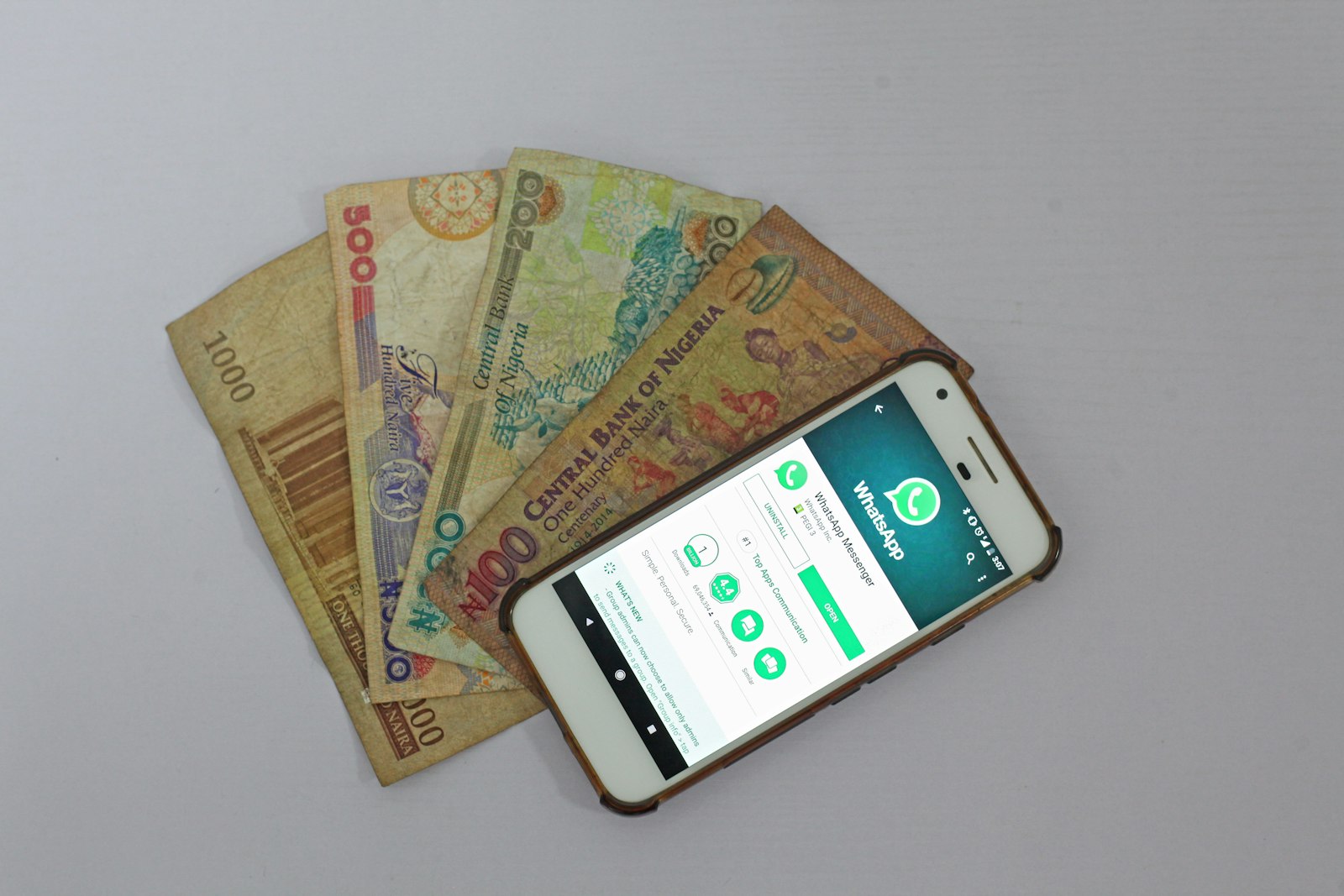
The package was small enough to slip into a coat pocket: a refurbished Samsung A-series, bought in a Manchester corner shop, padded in bubble wrap and posted to a Kasarani estate where Hannah Wanjiku's mother had been holding out on a fading Tecno. For thousands of households across Nairobi, that pattern — a diaspora child sourcing a phone abroad and shipping it home — is not a luxury. It is arithmetic. A new smartphone in Kenya can carry more tax than the device itself once cost to manufacture.
That arithmetic may be about to change. Treasury Cabinet Secretary John Mbadi has set out a proposal in the Finance Bill 2026 that would collapse the five overlapping levies currently charged on imported mobile phones into a single 25% excise duty, paid only when a device is activated rather than at the port of entry. The headline number, by Mbadi's own working, is a drop in the final shelf price of a typical handset from roughly KSh 31,100 to KSh 25,000 — a saving of just over six thousand shillings on a phone that today costs the equivalent of two weeks' wages for many Nairobi workers.
Five Taxes Become One
Under the current framework, a mobile phone imported into Kenya passes through a thicket of charges before it reaches a customer. There is the 16% Value Added Tax, the 10% excise duty, a 25% import duty, a 2.5% Import Declaration Fee and a 2% Railway Development Levy. Stacked together on a device's pre-tax cost, they create what the Treasury itself describes as an aggregate burden of roughly 55.5%.
Mbadi's bill proposes to sweep four of those lines off the table entirely — the VAT, the import declaration fee, the railway levy and the import duty — and replace them with a single excise duty pegged at 25%. Crucially, the moment of collection shifts. Instead of paying tax when the consignment lands at Mombasa or Jomo Kenyatta airport, the duty would attach when the phone is sold and activated for use. "On the day that the seller gets a client and the phone is activated, that is when they will pay tax, a single tax which is 25% duty," Mbadi told a public forum on 26 May, in remarks reported by TUKO.co.ke and a string of Kenyan business outlets.
For the Treasury, the case is one of simplification: fewer touchpoints, less leakage, easier compliance. For traders, it lifts the cash-flow cliff of paying upfront on stock that may sit on shelves for months. For consumers, it lowers the headline price tag.
Why the Diaspora Has a Quiet Stake
A change to Kenya's smartphone tax structure does not, at first glance, read like a diaspora story. But the household ledgers that connect a Kenyan in Boston, Doha or Manchester to a parent in Murang'a, Kisumu or Lamu sit squarely in the middle of it.
Remittances to Kenya climbed past KSh 600 billion last year, according to Central Bank of Kenya figures, with a large share moving through digital channels that depend, on both sides of the corridor, on a working smartphone. M-Pesa, Pesalink, Hustler Fund, government e-citizen services, hospital appointment apps, even the SHA health portal — the entire infrastructure that diaspora-funded transfers ultimately flow through assumes the recipient is holding a device that can run a modern app.
That is why so many diaspora gift cycles end with a phone. When a daughter in Dallas wires money to upgrade her father's handset, or a son in Doha sends a parcel containing a model bought in a UAE souk, the underlying logic is the same: the cost of a smartphone in Kenya has long outrun the cost of buying the same phone abroad and absorbing the postage. A KSh 6,000 cut to the shelf price of a mid-range device would not dissolve that gap, but it would narrow it — and shift, at the margin, where diaspora families choose to source their replacements.
The Activation Question
The most consequential detail in Mbadi's design is not the headline rate but the timing. By collecting at activation rather than importation, the Treasury moves the taxing event from the trader to the consumer-facing moment of sale. For wholesalers, that frees up capital. For the Kenya Revenue Authority, it tightens enforcement around the activation event, which is far easier to track than every kilogram of phone that passes through customs.
But it also raises a question that has not yet been answered cleanly in public documents: what happens to phones brought in as personal effects by returning Kenyans, or shipped as gifts by diaspora relatives? Currently, devices accompanying a traveller or arriving by parcel often sit outside the formal trader pipeline. Under an activation-stage model, the first time KRA could meaningfully assess such a phone is when its IMEI is registered to a Kenyan network — a database the Communications Authority of Kenya already maintains. Whether that hook will, in practice, be used to capture diaspora gifts is something the Finance Committee will likely be pressed on during public participation.
A Bill Still in Motion
The proposal is not yet law. Public participation on the Finance Bill 2026 is closing this week, with Parliament expected to take up the committee report ahead of the June budget reading. Mbadi has spent the last fortnight pushing back against opposition figures who have described the 25% excise duty as a new tax, framing his own intervention instead as a removal of four existing taxes and a recalibration of a fifth. Independent coverage by the Standard, Capital FM, Kahawatungu and The Kenyan Wallstreet broadly tracks Mbadi's arithmetic, while noting that the political reception inside the chamber is far from settled.
Two consumer-facing risks remain. The first is pass-through: traders may not transfer the full saving to buyers, especially if a depreciating shilling or supply-chain shocks erode margins. The second is enforcement: if activation-stage collection produces friction at the point of sale — long queues at registration, sudden price surprises at the till — the perception of cheaper phones may not match the lived experience.
A Cheaper Bridge Home
For the diaspora, the bigger picture sits above any single bill. Kenya is among the most mobile-first economies on the continent, and the smartphone has become the principal conduit through which money, news, school attendance and family conversation travel between Nairobi and the cities where Kenyans now live and work. A policy that lowers the cost of crossing that bridge — even by KSh 6,000 — touches every remittance corridor that runs into the country.
In Kasarani, Hannah Wanjiku's mother is still on the Tecno. If the Finance Bill clears Parliament in something like its current form, her next phone may not need to come from Manchester. It is a small reordering of a familiar household calculation. But it is the kind of small reordering, repeated across hundreds of thousands of diaspora-linked homes, that turns a tax committee's spreadsheet into a quiet shift in how Kenya stays connected to its abroad.