Six Signatures in Pretoria: How Ruto and Ramaphosa's New Pact Rewrites the Map for Kenyans in South Africa
Six agreements signed at the Union Buildings promise easier trade and deeper ties — and quietly reshape daily life for the Kenyan diaspora living and working in South Africa.
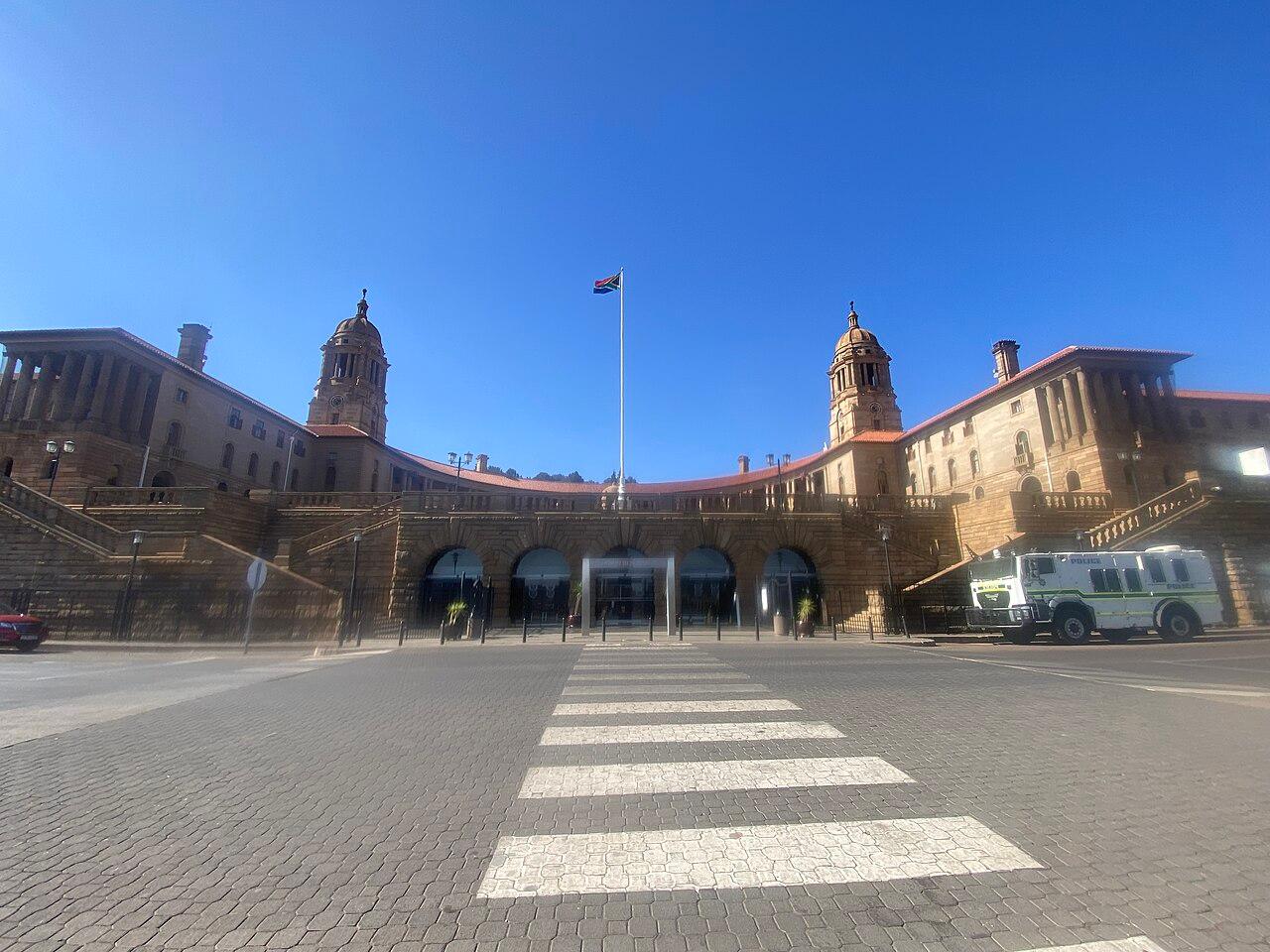
The sandstone terraces of the Union Buildings have watched over a century of ceremony, but Thursday afternoon's ritual carried a particular weight for two countries that like to call themselves Africa's anchor economies. On June 4, with military honours completed and bilateral talks concluded, President William Ruto and South African President Cyril Ramaphosa stood behind a long table in Pretoria as ministers exchanged six leather folders — six memoranda of understanding that both governments say will move their relationship from warm words to working machinery.
"With President Cyril Ramaphosa of South Africa, I witnessed the signing of six trade agreements between Kenya and South Africa at the Union Buildings in Pretoria, a clear testament to our commitment to deepening bilateral ties," Ruto said afterwards, according to People Daily.
For the cameras, this was statecraft. But for the Kenyans who actually live south of the Limpopo — the trader restocking a Johannesburg shop, the postgraduate student in Cape Town, the engineer on a Pretoria contract — the afternoon's paperwork reads less like diplomacy and more like a set of instructions about what their next five years might look like.
Six Folders on a Long Table
According to Capital FM, which reported from the signing, the six pacts cover trade facilitation, shipping and maritime cooperation, gender equality and women empowerment, technical and vocational education and training, arts and culture, and sports and recreation. The trade facilitation MoU is the one officials lingered on: it commits the two countries to cooperate on standardisation, technical regulations, conformity assessment, accreditation and metrology — the unglamorous plumbing that decides whether a pallet of Kenyan tea or a crate of avocados clears a South African port in days or months.
"The conclusion of the additional agreements in trade facilitation, maritime cooperation, gender equality and women empowerment, technical and vocational training, arts, culture and sports is an important milestone for this visit," Ruto said, adding that "their effective implementation will grant the people of our two countries tangible benefits."
Ramaphosa framed the documents as legal scaffolding rather than symbolism. "The memoranda of understanding that have just been signed provide a legal framework to further expand our cooperation," he said, noting that Kenya remains South Africa's largest trading partner in East Africa.
The Visa Decision That Started It
Buried in Ramaphosa's remarks was a reminder of the single policy change that has done more than any communiqué to knit the two countries together: the immigration decision of 2022, when Pretoria eased entry for Kenyan visitors. Before that, the visa queue outside South Africa's Nairobi mission was a fixture of Kenyan middle-class frustration — businesspeople missing conferences, families missing graduations.
"Tourism, business travel and cultural exchanges have grown," Ramaphosa said, per People Daily. "This is a clear demonstration of how reducing barriers can bring Africans closer together and advance the vision of Agenda 2063: The Africa We Want."
The numbers behind the sentiment are commercial as much as personal. More than 60 South African companies now operate in Kenya, in sectors running from telecommunications and financial services to retail, manufacturing, pharmaceuticals and infrastructure. Traffic in the other direction has historically been thinner — which is precisely what Thursday's agreements, and the Kenyan community already established in South Africa, are positioned to change.
What a Standards Pact Means for a Small Trader
Strip away the acronyms and the trade facilitation MoU answers a question every Kenyan exporter and diaspora middleman knows intimately: whose laboratory certificate counts? Until standards bodies recognise each other's testing and accreditation, a Kenyan product can be perfectly legal at home and unsellable in a Pretoria supermarket. Harmonising those systems is slow, technical work, but it is the difference between a diaspora side-hustle and a scalable import business.
Both presidents tied the pact to the African Continental Free Trade Area. "We are proud of the milestone we achieved when South Africa and Kenya launched the first consignments traded under the AfCFTA Guided Trade Initiative," Ramaphosa said. "This shows that the AfCFTA is not just an aspiration. It is a living instrument that is already transforming intra-African trade."
His invitation was unusually direct. "We want to see more Kenyan businesses investing in our market, and we want to see more Kenyan goods on the shelves of our country," he said — a sentence that Kenyan traders in Johannesburg's wholesale districts may want to keep on file.
The Imbalance Neither Side Hides
For all the warmth, both leaders acknowledged the awkward arithmetic: Kenya buys far more from South Africa than it sells back. The pledge to dismantle remaining tariff and non-tariff barriers is aimed squarely at that gap, and Ruto came with a concrete proposal — inviting South African vehicle manufacturers to set up spare-parts production inside Kenya's Special Economic Zones to serve the East African market.
The institutional follow-through is meant to come from a planned South Africa–Kenya Joint Business Council, alongside a business forum held at Gallagher Estate in Midrand, where executives from both countries discussed joint ventures and public-private partnerships. For diaspora professionals who have spent years translating between the two business cultures — and being paid in neither — a formal council is the kind of structure that can turn informal brokering into recognised work.
The Question of Welcome
No conversation about Kenyans in South Africa is complete without the harder subject. African migrants in South African cities have periodically faced hostility, and the memory of past xenophobic violence still shapes how new arrivals choose neighbourhoods and routes home from work. During the visit, Capital FM reported, Ramaphosa pushed back against the xenophobia label, arguing that migration challenges require African-led solutions and deeper integration rather than closed doors.
That is where the softer MoUs — arts, culture, heritage, sports and recreation — stop looking like ceremonial padding. Cultural exchange programmes, touring exhibitions and sporting fixtures are the slow infrastructure of familiarity. A Kenyan name on a Johannesburg gallery wall or a Nairobi club in a South African tournament does quiet work that no customs protocol can.
What to Watch After the Motorcade Leaves
Memoranda of understanding are promises, not statutes, and the diaspora has seen handsome signings fade before. The tests will be specific: whether the standards bodies actually publish mutual recognition schedules, whether the Joint Business Council is constituted with working members or ribbon-cutters, whether TVET exchanges produce visas for real students, and whether the maritime pact translates into cheaper, faster cargo between Mombasa and Durban.
What is different this time is the density of people invested in the answer. Three decades of formal relations, a visa regime that finally lets ordinary citizens move, and a Kenyan community in South Africa that has matured from sojourners into stakeholders — that is the constituency watching the small print. The folders have been exchanged. The follow-through, as ever, belongs to the people the cameras never film.


