From Unpaid School Fees to a NASA Branch: The Kenyan Scientist Reading the Planet's Climate in Reflected Light
Charles Gatebe was sent home from a Kenyan classroom over unpaid fees. He now leads an atmospheric science branch at NASA — and keeps pulling other students up behind him.
When the school doors closed on Charles Gatebe because his family could not raise the fees, the boy walking home through rural Kenya had no reason to imagine that his name would one day sit on the office door of a NASA branch chief. Decades later, that is exactly where it sits. Dr. Charles Gatebe now leads the Atmospheric Science Branch at NASA's Ames Research Center in California, steering research into the clouds, dust and reflected sunlight that govern the planet's climate.
His story has been circulating again this week through Kenyan diaspora outlets, and it lands at a useful moment. For a community that reads immigration setbacks and visa delays almost daily, Gatebe's path is a reminder of what the long arc of migration can also produce: not just remittances and survival, but a Kenyan name at the center of one of the world's most demanding scientific institutions.
From Unpaid Fees to a Branch Chief's Desk
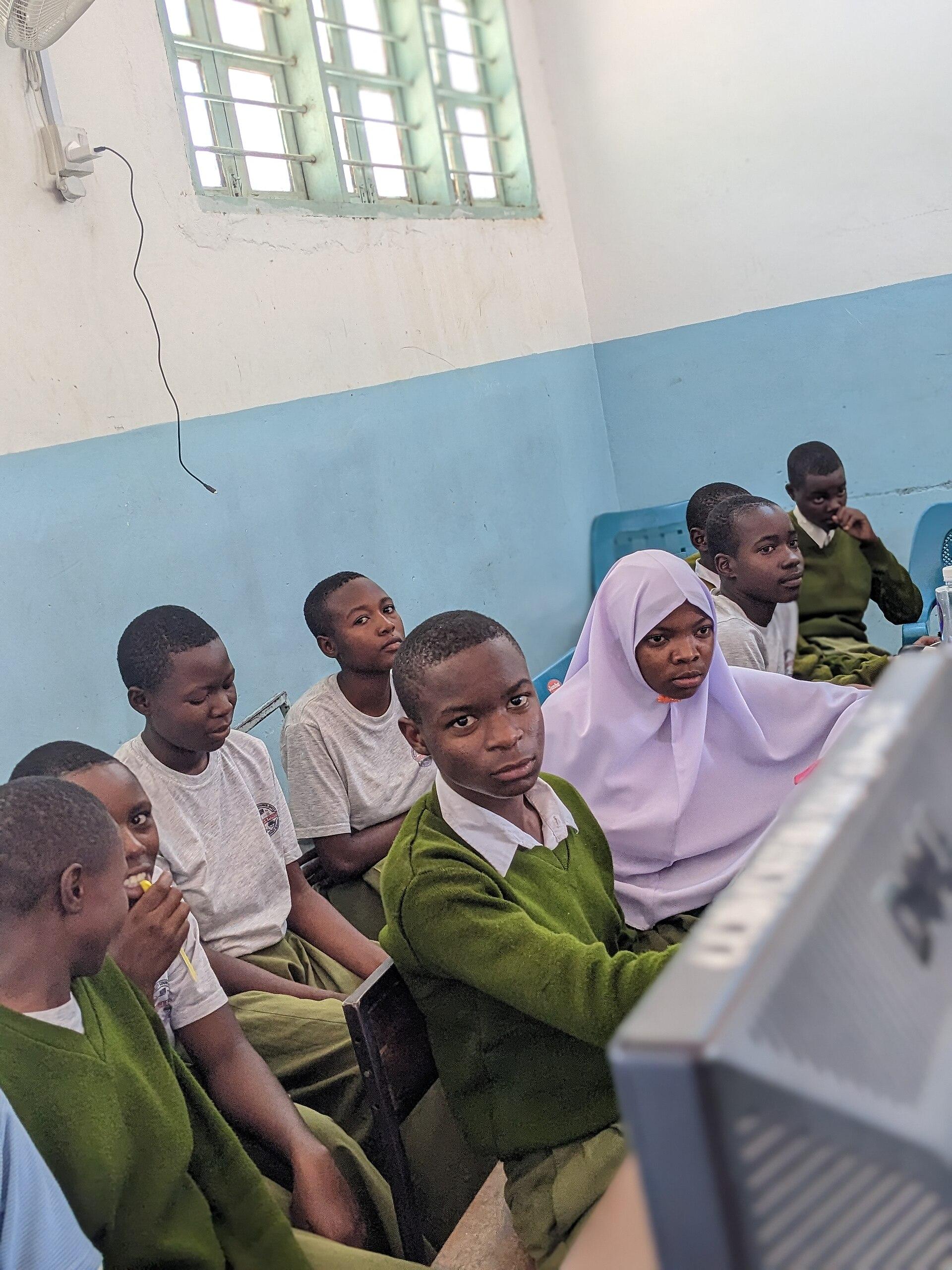
Gatebe was born into a family of nine children and grew up in circumstances that demanded responsibility early. As the third-born, he helped his mother run a household that kept expanding, learning the discipline of work long before he learned the physics of the atmosphere. His schooling was repeatedly interrupted, most often by the same problem that still pushes Kenyan families to the edge today: unpaid school fees.
He has often returned to one lesson from his mother, delivered on a day he came home humiliated at being sent away from class. "Those kids you see out there who look well-off came to this world the same way you did. You are no different," she told him. It was not a promise of money. It was a refusal to let poverty define what he could become, and by his own account it reshaped how he measured himself against the world.
The academic record that followed reads like a steady climb out of that early uncertainty. Gatebe earned a Bachelor of Science in Meteorology, Mathematics and Physics from the University of Nairobi in 1990, then a Master's in Meteorology in 1994. In 1999 he completed a PhD in Atmospheric Physics at the University of the Witwatersrand in South Africa. Along the way he worked at the Kenya Meteorological Department and lectured at the University of Nairobi, teaching air-pollution studies that drew on nuclear-related measurement techniques.
The Science of Reflected Light
The same year he finished his doctorate, Gatebe moved to the United States to join NASA's Goddard Space Flight Center in Maryland as a resident research associate. He built his career there through collaborations with the University of Maryland, Baltimore County and the Universities Space Research Association before becoming a research scientist in his own right and, eventually, a branch chief on the other side of the country.
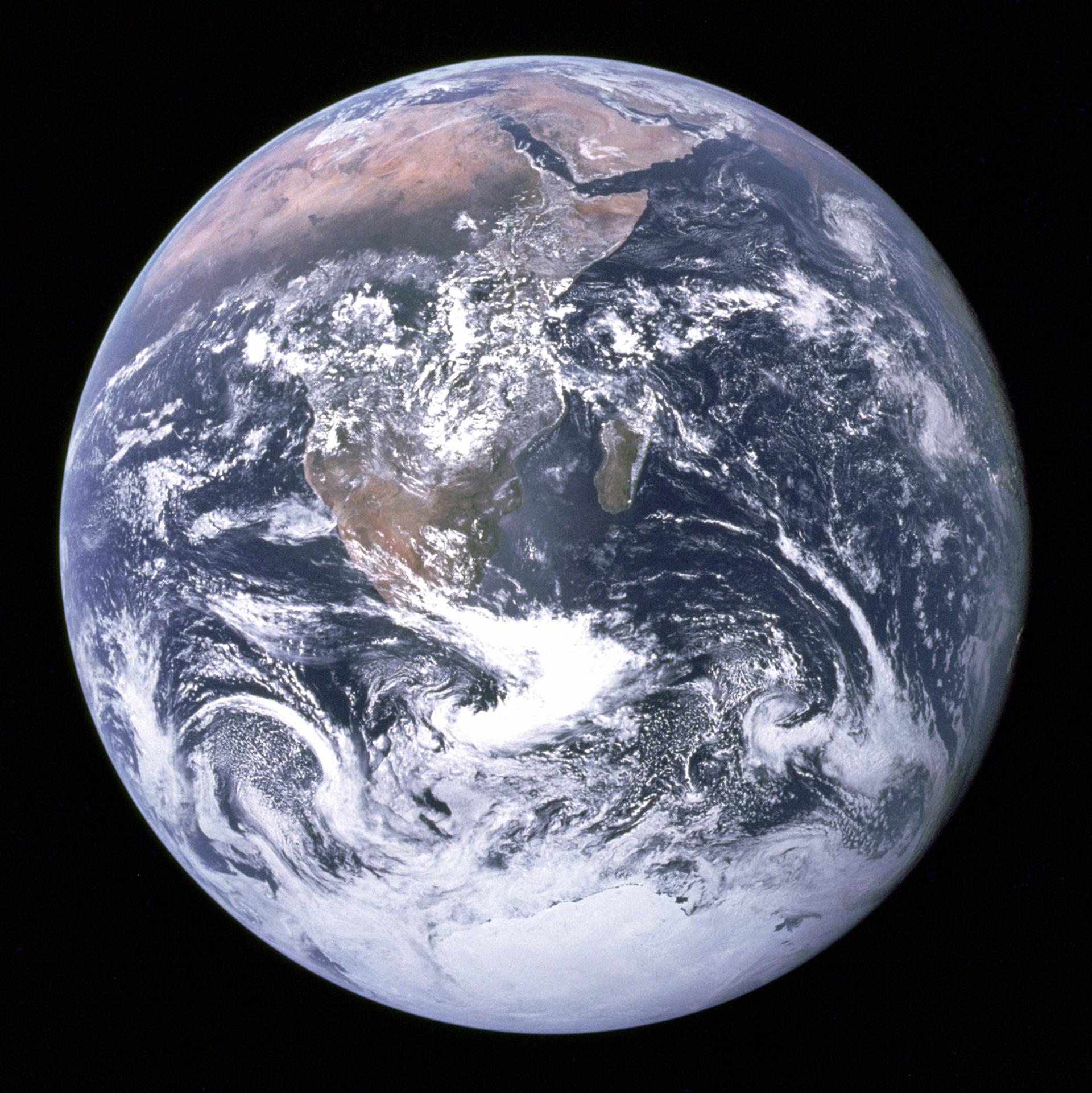
His work sits at a deceptively simple question: what happens to sunlight when it hits the Earth and bounces back? The answer turns out to be one of the most important variables in climate science. By measuring reflected light with precision, researchers can read the composition of the atmosphere and the properties of the surface below, from forests and farmland to oceans and ice. Those readings feed directly into estimates of Earth's radiation budget, the delicate balance between the energy the planet absorbs and the energy it sends back to space.
Gatebe's particular focus has been on clouds, aerosols, ecosystem structure and the feedback loops that amplify or dampen a warming climate. He leads NASA's Cloud Absorption Radiometer project, an instrument flown aboard research aircraft to gather data that satellites alone cannot fully capture. Over the years that work has put him on airborne science missions across the United States, Africa, Greenland, Canada and the Pacific, often in the unglamorous role of validating the satellite observations that the rest of the climate community relies on.
Building a Ladder for Others to Climb
What distinguishes Gatebe within NASA is not only the research but the deliberate effort to widen the door behind him. He heads the SaSa programme, a collaboration between NASA centers and minority-serving institutions that brings students into real airborne science research rather than leaving them on the outside of it. The aim is blunt: to put young people from underrepresented backgrounds inside the aircraft, the data and the careers, not merely in the audience.
That instinct has not gone unnoticed. In 2000 he received the World Meteorological Organization's Young Scientist Award, and in 2013 NASA honored him with its Robert H. Goddard Award for Outreach, a recognition that explicitly tied his scientific contributions to his commitment to mentoring the next generation of researchers. For a man whose own education nearly ended over a fee balance, the emphasis on access is not abstract. It is autobiography turned into policy.
Why the Diaspora Keeps Telling This Story
There is a reason profiles of Gatebe resurface in Kenyan diaspora media rather than fading after a single news cycle. The community abroad spends much of its attention on hard logistics, the green-card rules, the work-visa thresholds, the processing delays that decide whether families stay together. Stories like his offer a different ledger entry: evidence that the same migration pipeline that produces nurses, drivers and care workers also produces a climate scientist running a NASA branch.
It is a story that resists easy triumphalism, and that is part of its value. Gatebe did not leave Kenya because the country had nothing to offer; he trained at the University of Nairobi and the Kenya Meteorological Department before South Africa and the United States. His trajectory is less a tale of escape than of a talent that moved through several systems and kept rising, the kind of brain circulation that diaspora economists argue can eventually flow back home through knowledge, networks and inspiration rather than cash alone.
For Kenyan students watching from Nairobi or Nakuru, the practical lesson is narrower and more useful than any slogan. Meteorology, mathematics and physics, studied seriously at a Kenyan public university, were enough to begin a path that ended inside NASA. The talent was local. The opportunity, in the end, was global.
A Name on the Door
Gatebe's office at Ames now carries a title that would have seemed unimaginable to the boy turned away from class. But the more telling detail is the SaSa students he keeps pulling into the work, and the Kenyan readers who keep passing his story around. A diaspora that often measures itself by what it sends home in money is, in his case, reminded of something harder to wire across borders: proof that the ceiling was never as low as the fee balance once suggested.
Whether that proof changes a single policy is doubtful. Whether it changes how one student in a Kenyan classroom imagines the limits of a meteorology degree is a different question, and a more hopeful one.