From Nairobi to the Nordic Light: How Stockholm's Kenyan Cultural Day Became Northern Europe's Biggest Diaspora Gathering
Every June, a single Saturday in a Stockholm park draws Kenyans from five Nordic countries. This year, the politics of diaspora voting and a presidential visit to Helsinki have raised the stakes.
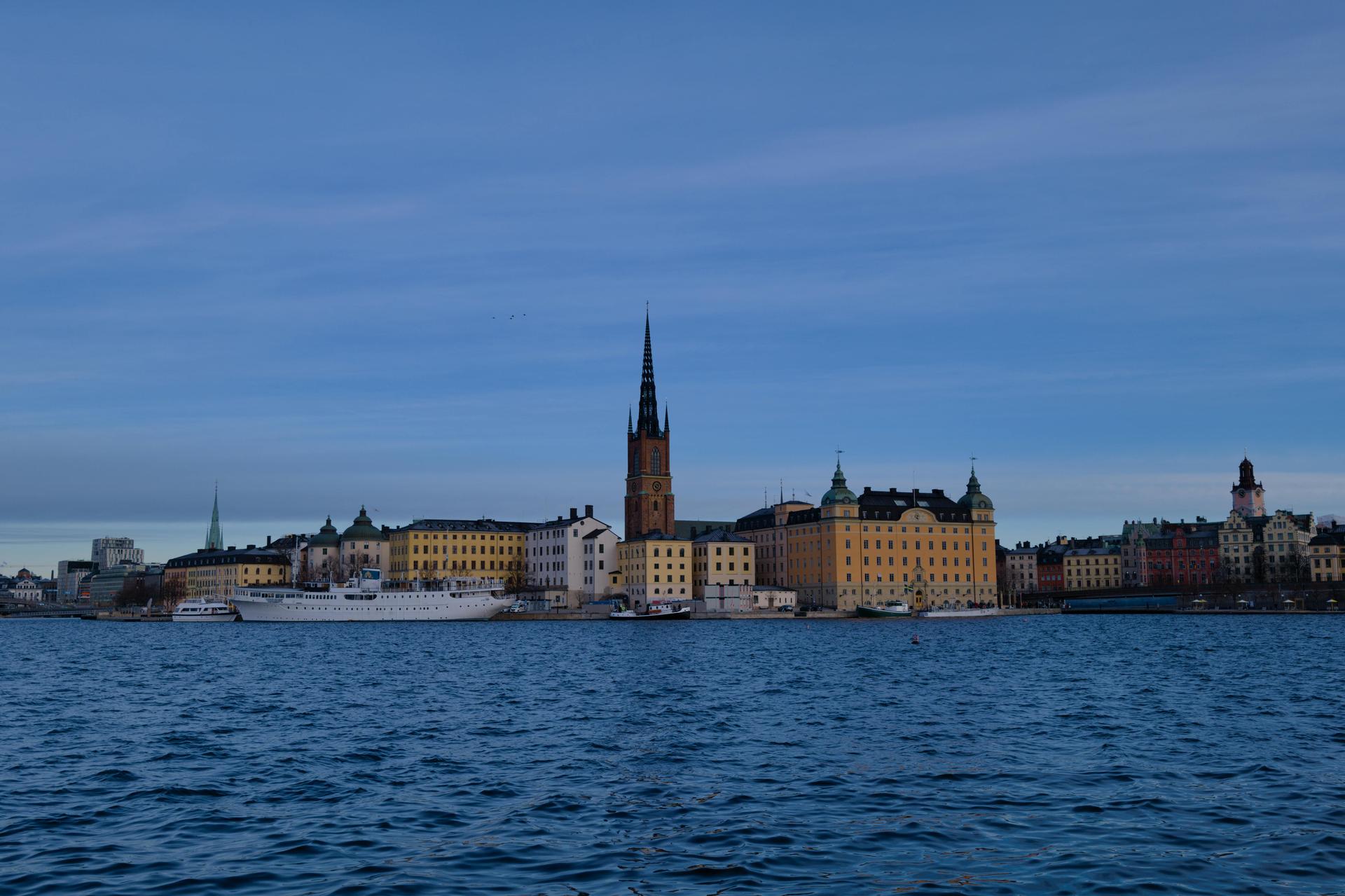
In a hall on the outskirts of Stockholm, a steel grill is hauled out of a van and set down in the chill of an early Nordic summer. The chapatis are in foil, the pilau is being measured into a giant pot, and a Bluetooth speaker is being argued over by two men who both insist they should pick the first song. For most of June this is just a private cookout among friends. On the last Saturday of the month, it becomes the largest event the Kenyan community in Northern Europe puts on all year.
The annual Kenya Cultural Day, scheduled for Saturday, 27 June 2026, draws Kenyans from across Sweden, Denmark, Norway, Finland and Iceland to one venue in the Swedish capital. Organisers told the diaspora press this week that they expect a record turnout, building on a tradition that has slowly become a fixture of the calendar for an estimated 30,000 Kenyans scattered across the Nordic region. For some it will be a four-hour flight, for others a two-hour train ride across the Øresund bridge. Almost all will arrive with food.
A Saturday in Stockholm
The Cultural Day's programme is deliberately simple. There is Kenyan food: nyama choma turned over open flame, pilau heavy with cardamom and cumin, chapatis layered the way grandmothers stack them at home. There is music, traditional dance and a sporting component that usually doubles as the loudest part of the day, with mini-tournaments arranged on the spot by whoever brought a ball and a whistle.
The organisers describe it as a chance to "showcase Kenya's cultural heritage" — language that on paper reads like embassy boilerplate but in practice carries weight in households where children speak Swedish at school and English at work. Cultural Day is one of the few moments in the year when those children watch hundreds of adults eat with their hands, dance to benga and Genge, and argue about Harambee Stars without translation. The performances mix old and new: regional dance troupes from Western and Coastal Kenya share the stage with Nordic-born performers whose Kiswahili is shakier than their Swedish.
The 30,000 behind the picnic tables
Sweden hosts the largest single Kenyan population in the Nordics, but the diaspora here is small relative to the established communities in the United Kingdom or the United States. The Kenyan Embassy in Stockholm, which serves the wider region, estimates 30,000 Kenyans live across the five Nordic countries. They are spread thinly: clustered around Stockholm, Gothenburg and Malmö in Sweden, Oslo and Bergen in Norway, Copenhagen in Denmark, Helsinki and Espoo in Finland, with a much smaller presence in Iceland.
The sectoral mix has shifted over the past decade. Where earlier waves of Kenyans came largely as students or asylum seekers, the current population is increasingly professional. Nordic healthcare systems have absorbed Kenyan nurses and doctors as their own workforces age. Kenyan engineers staff teams at Ericsson, Volvo and Nokia. Kenyan researchers work at the Karolinska Institute and at Aalto University. Cultural Day is one of the rare occasions when those nurses, engineers and researchers eat from the same pot as the part-time students and the new arrivals waiting for residence permits.
One embassy, seven capitals
The Kenyan diplomatic footprint in Northern Europe is unusually stretched. The embassy in Stockholm, led by Ambassador Angeline Kavindu Musili, MBS, holds concurrent accreditation to Denmark, Finland, Norway, Iceland and the three Baltic states of Estonia, Latvia and Lithuania. That single mission is the legal home for any Kenyan in those eight countries who needs a passport renewed, an emergency travel document issued, or a death of a relative processed.
Embassy officials travel constantly across the region to manage that workload. In a year they might run a passport drive in Copenhagen, a business forum in Helsinki and a memorial service in Oslo. Cultural Day is the only fixed point in the calendar where the embassy can engage with the entire population it serves in one place. The event is also where diaspora associations come to lobby — about consular fees, about land documentation back home, about the slow march toward diaspora voting.
Ruto in Helsinki, eleven days earlier
This year's Cultural Day arrives wedged into a busier diplomatic month than usual. President William Ruto is scheduled to visit Finland on 10 and 11 June 2026 for talks with Finnish leaders, with trade, education, technology, innovation and climate change all on the agenda. The Stockholm embassy has confirmed a Diaspora Engagement Forum in Helsinki on the evening of 11 June, where Kenyans living anywhere in the Nordic-Baltic region have been invited to meet the president directly.
For organisers of the Stockholm Cultural Day, the two events are now informally linked. Conversations begun in a Helsinki hall on 11 June about diaspora voting registration, remittance corridors and the long-delayed reopening of Kenyan honorary consulates in Oslo and Copenhagen are expected to spill into the picnic blankets of 27 June. The president has reaffirmed his government's intention to involve the diaspora more closely in national affairs, and Nordic Kenyans — many of whom are dual citizens — are pressing for that to translate into clearer voting arrangements ahead of the 2027 general election.
What Cultural Day carries home
There is a quieter reason the event has grown. The Kenyan community in the Nordics is now old enough to have a second generation of children who have never lived in Kenya. For many of those children, Cultural Day is the closest they will come this year to a Kenyan wedding, a Kenyan funeral or a Kenyan church service. It is where they learn that pilau is not the same as biryani, that "harambee" is not just a word in a school project, and that 30,000 strangers can feel briefly like one family.
For their parents, the day does double duty. It is a soft assertion that being Kenyan does not end at the border, and a practical opportunity to swap information about the things that keep diaspora households up at night — Swedish nursing licensure, Norwegian family reunification rules, Danish tax filings, the cost of shipping a body home. By sundown, the music thins out and the leftover chapatis are wrapped for the train ride to Malmö or the flight back to Reykjavík. The pots come off the grill. Until next June, the community goes back to being scattered.