A Utility Bill Kenya Does Not Print: How PayPal's New Freeze Reaches the London Client Who Just Paid $190 to a Nairobi Writer
Permanent bans, 180-day locks, and demands for paperwork Kenyan addresses rarely produce — the FATF grey list is now a problem for diaspora payments and freelancers alike.
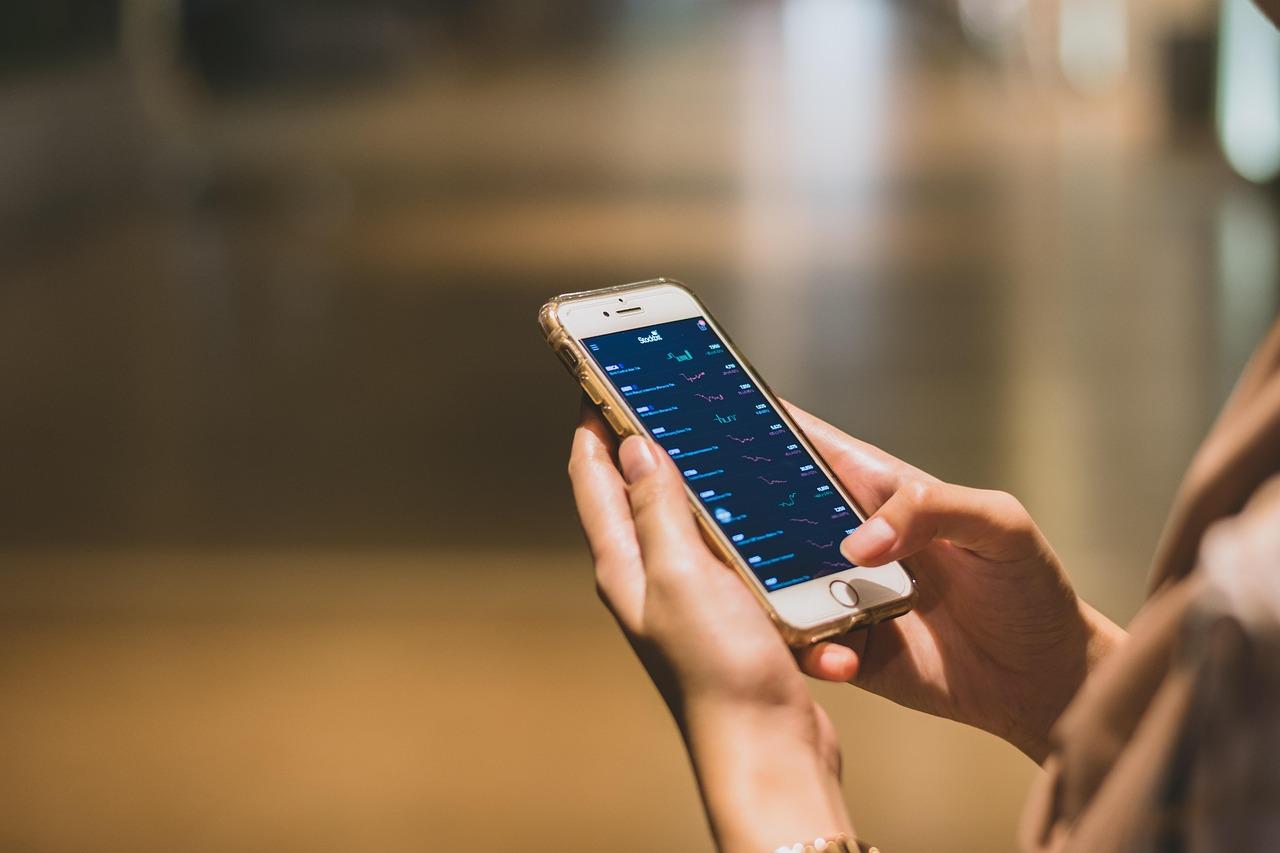
The email from PayPal arrived in a Nairobi inbox on a quiet Tuesday afternoon: the writer's account had been "permanently limited," and $190 sent from a client in the United Kingdom — payment for two weeks of editing on a small magazine — was now frozen for at least 180 days. The writer, who had been receiving foreign payments through the platform since 2019, sat with the message for an hour before reading it again, slowly. The notice said nothing about appealing, only that PayPal had decided not to "offer services for this account" any longer.
A version of that email landed in an undisclosed number of Kenyan inboxes in late May and early June, and by the time the business news outlet Tuko picked up the story on Wednesday morning, it had become clear that the freezes were not isolated incidents. They were the visible edge of a sweeping anti-money-laundering compliance push the company has been running across Kenya — one that ties together a global payments giant, a global financial watchdog, and the absence of a single sheet of paper most Kenyan households never receive.
The Six-Month Lock
Under the new requirements, Kenyan PayPal users receiving money from abroad must submit bank statements, proof of physical address, and details of the contracts or services for which they are being paid. Users who do not provide the requested documentation are blocked from withdrawing or transferring their funds for at least six months. Accounts that remain non-compliant for more than 180 days are permanently closed — and, in line with PayPal's standard policy on closures linked to compliance reviews, any remaining balance is not automatically returned to the sender.
PayPal has framed the requests as standard anti-money-laundering due diligence, the kind of know-your-customer review the company applies to flagged accounts globally. But the scale and the speed in Kenya are new. Affected users span a familiar list of digital-economy workers: freelance writers, designers and developers; small import-export traders; content creators and visual artists; and a long tail of recipients of small donations and crowdfunding contributions sent through the platform's send-money feature from family and friends abroad.
For each of them, the consequence is the same. Money received, money visible in the account balance, money technically theirs — and money they cannot touch for half a year.
A Utility Bill Kenyan Mailboxes Rarely See
The hardest piece of the new documentation is the one that sounds simplest: proof of a physical address. PayPal asks for utility bills — electricity, water, gas, internet — or similar statements that show a name and a residential street address.
In much of Nairobi, Mombasa and the rest of the country, that requirement runs into a quiet feature of Kenyan urban life. Kenya Power's monthly bill is delivered to a postal box or as a paperless statement keyed to a meter number, not to a Plot 12, House B address. Many tenants pay rent in cash and never see a contract with their name on it. Water and internet accounts often sit in a landlord's name. Even where bills do bear a name, the address printed on them frequently lists a town or estate rather than a verifiable street and number that matches the global formatting PayPal's compliance forms expect.
A freelancer in Westlands or Kileleshwa can earn dollars from clients across three continents while never possessing a single piece of paper that meets PayPal's bar for proof of residence. The platform's verification system was designed for jurisdictions where every adult has a phone bill addressed to a street. Kenya is not one of them.
How the Freeze Reaches the Diaspora Sender
For Kenyans abroad, the freeze has a quieter second life. PayPal has long been the small-amount channel of choice between diaspora senders and recipients at home — used not for the big monthly transfers that ride on M-PESA Global, WorldRemit or Wise, but for the in-between sums: a graduation gift, a sister's school fee balance, a contribution to a fundraiser for a hospital bill, a thank-you payment to a creator running a YouTube channel out of Nairobi.
When the recipient's account is frozen, that money does not bounce back. It sits, untouchable for six months, in a holding state. Several affected users described to Business Daily, which carried the same reporting alongside Tuko, that PayPal had asked them for additional documents even after they had submitted initial verification — a moving compliance target that has left senders abroad uncertain whether their transfers will clear at all.
A Kenyan nurse in Manchester who has been sending occasional $50 contributions to a cousin's small graphic-design shop in Nakuru learned this week that the cousin's account is now in 180-day limbo. The latest transfer is logged, visible, and frozen. The nurse can see it in her own transaction history, can prove she sent it, and can do nothing to recall it.
The Grey-List Shadow
The compliance push does not exist in a vacuum. Kenya remains on the Financial Action Task Force's grey list — the international watchdog's roster of jurisdictions whose anti-money-laundering and counter-terrorist-financing systems are considered to have strategic deficiencies. The country was added to the list in February 2024 and has spent the eighteen months since trying to demonstrate enough progress to leave it.
For global financial institutions, a grey-listed jurisdiction is a flagged jurisdiction. Banks tighten correspondent relationships. Payment processors raise verification thresholds. Card networks layer additional fraud checks onto Kenya-tagged transactions. PayPal's new round of demands sits inside that wider pattern: a private-sector tightening that follows from a public-sector classification, even where the individual Kenyan user has nothing to do with the underlying policy gaps the FATF identified.
The Kenyan government has been working publicly to exit the list, with the Central Bank of Kenya, the Financial Reporting Centre and the Capital Markets Authority all citing reforms now in motion. None of those reforms reach the individual freelancer whose dollars are frozen this week.
What Comes Next
The affected users have few clear avenues. PayPal does not maintain a Kenyan office; appeals run through a global support queue that, according to multiple users quoted in local coverage, has so far returned form replies rather than case-by-case review. The Communications Authority of Kenya and the Central Bank both regulate domestic payment flows but have limited reach into the policies of a US-headquartered platform applying its own compliance posture.
For diaspora senders, the practical advice circulating in Kenyan WhatsApp groups in London, Atlanta and Dubai this week is brittle but consistent: confirm with the recipient that their PayPal account is in good standing before sending; keep transfers small until the dust settles; and consider M-PESA Global, Wise or Remitly for amounts above $50, where the recipient has not already verified into PayPal's new standard.
The $190 frozen in the Nairobi writer's account, meanwhile, remains exactly where it was on Tuesday. It is visible. It is hers, on paper. And it will not move before Christmas.


