The Wave Before the Door: How a Kenyan Grandfather's Final Frame in Alabama Has Become a Year-Long Cold Case
Reuben Waithaka flew 8,000 miles from Nairobi to Calera for his grandson's graduation. A day later, he walked out a petrol-station back door and vanished. A year on, the case remains open.
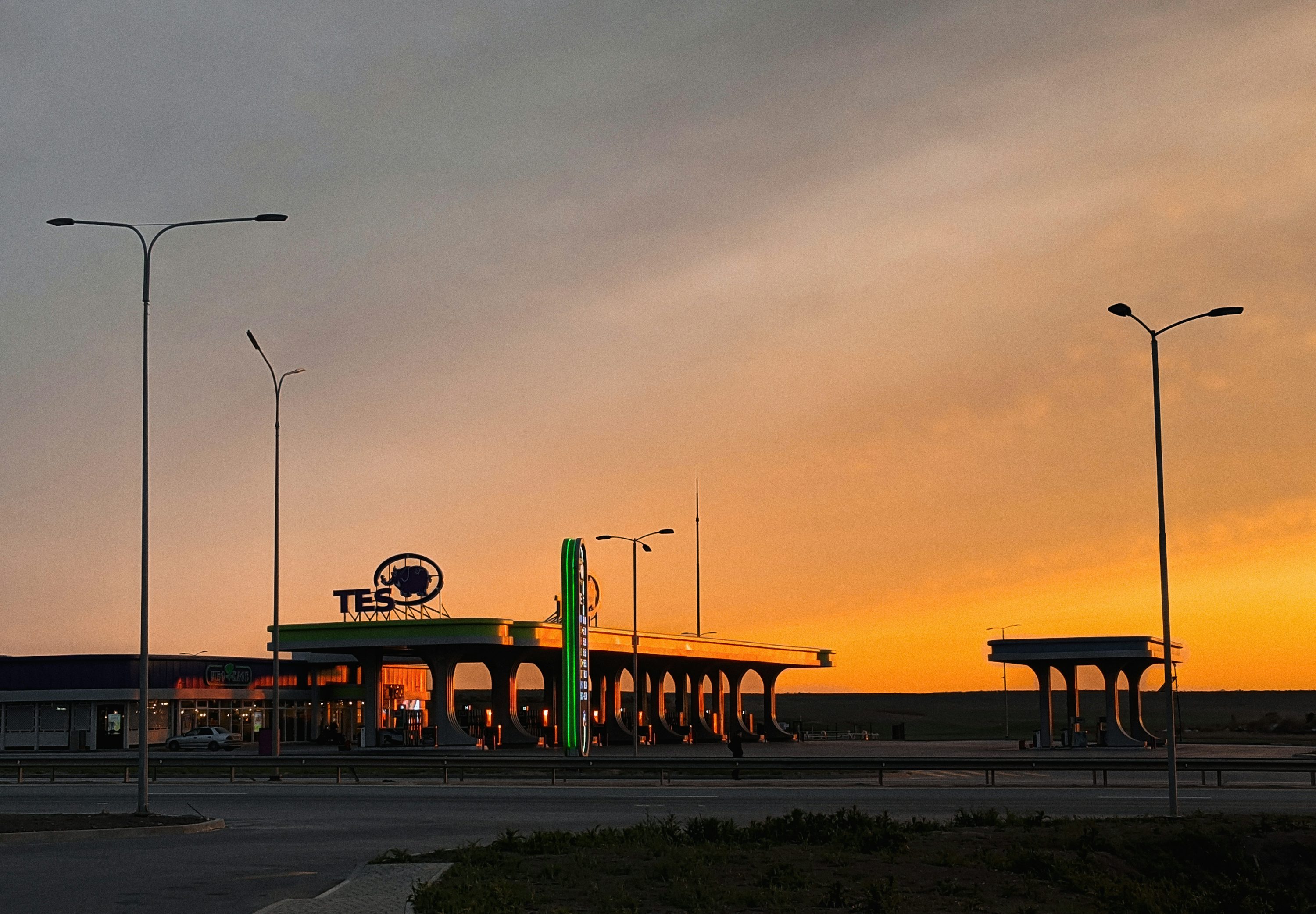
A wave at a cashier. A door swinging shut. That is the last frame anyone has of Reuben Waithaka, captured on a service-station camera in Calera, Alabama, at 11:36 in the morning on the 15th of May 2025. He had flown roughly eight thousand miles from Nairobi a day earlier, in time to watch his first grandson graduate from Calera High School. He was seventy-two years old. He carried no wallet, no identification and no phone. Twelve months on, no one has seen him since the back door of that restroom closed behind him.
For the Waithaka family, this week is not an anniversary so much as a hardening of the silence. The renewed appeal from his son, Willie Barua, that began circulating across diaspora Facebook groups this weekend is, in some ways, the same appeal he made in June, and again in October, and again at Christmas. But the calendar gives the silence a new weight. The Calera Police Foundation has now pushed its reward to a level Detective Blake Littleton and his colleagues describe as significant for a small Shelby County department, and the case remains, in the language of American policing, very much open.
A graduation, a grandfather, an unfamiliar country
What is easy to forget, watching the surveillance frames replay on local Alabama television, is how ordinary the trip was meant to be. Reuben Waithaka had spent his career in Kenya before retiring. He was not a frequent flier. His first grandson, the child of his son Willie, was finishing high school in Calera, a small town off Interstate 65 with a population of roughly fifteen thousand. The grandfather had built up the visit for months. He had bought the suit. He had been at the airport in Nairobi at the appointed hour. He landed in Birmingham on the 14th of May, slept in his son's house, and walked out the next morning, apparently for a short errand to a nearby petrol station along Highway 25.
Police Chief David Hyche later told local reporters that the choices in the surveillance video did not match the ordinary behaviour of a man on an errand. Mr Waithaka enters the Speed Trac store, raises a hand to the cashier in greeting, walks to the restroom and then exits through a rear door that opens not onto the parking lot but onto thick undergrowth backing into hunting land. There is no further camera. There is no obvious car. He was last seen wearing a blue-and-white plaid shirt and khaki trousers.
What the police now believe and cannot prove
In the weeks after the disappearance, the Calera Police Department deployed K9 units, drones and a helicopter borrowed from a neighbouring agency. Officers walked the woodland in a series of expanding circles. They followed the small creek that runs behind the station. They knocked on the doors of nearby properties. Tips arrived in waves whenever a national broadcaster picked up the story, and Chief Hyche has been candid that hundreds of those leads were chased and exhausted.
The working theory inside the department, repeatedly and carefully stated, is that Mr Waithaka was in the early stages of dementia and became disoriented after walking into a landscape that bore no resemblance to anywhere he had ever lived. The family has not contradicted the suggestion. They have, however, asked Alabama investigators to keep open the possibility that a passing motorist may have offered him a ride. Federal partners including Immigration and Customs Enforcement have been quietly drawn into the case, in part because Mr Waithaka was on a short-stay visitor visa and would not have shown up in any database had he been admitted to a hospital under another name.
A year later, none of those threads has produced him.
Why the diaspora is paying close attention
For Kenyans across the United States, the Waithaka case is not simply one missing-person story. It is a familiar shape. Each year, parents and grandparents fly in for graduations, weddings and christenings. They arrive jet-lagged and overwhelmed. They are placed, often within hours, in suburban American towns whose street patterns make no sense to a person used to Nairobi, and whose distances cannot be walked safely without a vehicle. Many do not own a US phone. Many cannot drive on the right-hand side of the road. Several diaspora groups in Atlanta, Dallas and Minneapolis have, in the past year, quietly circulated checklists for hosting visiting relatives: a printed business card with the host's address and number, a wrist tag for elderly visitors, a rule against unaccompanied morning walks for the first week.
That is not a coincidence. It is a direct response to the image of an elderly grandfather wandering out a back door in Calera.
The Kenyan High Commission in Washington has, the family says, kept in informal contact with Willie Barua. But consular involvement in cases like this is limited. The United States Department of Homeland Security and local Alabama law enforcement own the search, and a Kenyan diplomatic note can do little more than encourage them to keep the file warm.
A small town that has not let go
What is striking about Calera, a year on, is how visibly the case has settled into the town's collective memory. The Speed Trac station still has a printed missing-person notice in its window. Local volunteers gather every few months to walk a patch of woodland that was not yet covered. The Calera Police Foundation, a small civilian body that supports the department's investigations, has nudged the reward upward in stages and now offers a figure substantially larger than the initial one announced last summer.
Detective Littleton, in his most recent local-television interview, used a phrase that Willie Barua has since repeated: this case is not closed. The detective also acknowledged the obvious: that a body, in Alabama heat and dense vegetation, would not last long uncovered. The search has shifted in tone. It is no longer a rescue. It is, increasingly, a recovery.
What the family wants now
Mr Waithaka's wife, Elizabeth, returned to Kenya last year to manage the family's affairs. She has told relatives she does not believe her husband is alive but does want a body, or at least the certainty of what happened, so that the funeral rites his community in central Kenya expect can be performed. The grandson whose graduation began the trip has now finished his first year of college; the family says the ceremony last May went ahead without the grandfather it had been organised around.
For Willie Barua, the request he has put before the diaspora this week is simple: keep the photograph circulating. The blue-and-white plaid shirt. The khaki trousers. The age, seventy-two. The location, Highway 25 in Calera, Shelby County, Alabama. Somebody, he says, may yet remember a stranger they offered a ride to in May 2025 who could not quite explain where he was trying to go.
The Calera Police Department's non-emergency line is the address for any such memory. So, the family says, is the Kenyan High Commission. A year of silence has not changed what is being asked. It has only made the asking heavier.