A Conference Room in Prague: How a Quiet Foreign-Affairs Visit Stitches Kenya Into a New Corner of Central Europe
For Kenyans scattered across the Czech Republic, a Saturday meeting in Prague turned an under-noticed diaspora outpost into the latest stop on Nairobi's expanding European map.
By Saturday afternoon in Prague, the meeting room set aside for Kenya's Principal Secretary for Foreign Affairs had filled with a particular kind of audience. There were students from Charles University who had stayed for work, nurses who had pieced together careers through Czech-language courses, traders moving goods between Mombasa and warehouses around Brno, and parents balancing children in unfamiliar school uniforms. Most had never seen a senior Kenyan official up close. Then Dr Korir Sing'Oei walked in, flanked by two MPs and an ambassador whose remit stretches across half a continent, and the conversation began.
The forum, held on 23 May with the support of the Kenyan Embassy in Berlin, was not the kind of event that draws headlines in Nairobi. There were no signed deals, no choreographed handshakes for state cameras. But for the Kenyans in attendance, and for a ministry that has spent years rebranding itself around its diaspora, the meeting carried more weight than the modest programme suggested. It marked Prague's quiet inclusion in a circuit of European cities — Berlin, Warsaw, Stockholm, and now the Czech capital — that the State Department for Diaspora Affairs has begun visiting with growing regularity.
The room that filled up
Czech Republic is not where most Kenyan diaspora conversations begin. The country has long sat in the shadow of the United Kingdom, Germany and the Netherlands when policymakers map out the European diaspora. Yet the community in Prague and the industrial cities to its east has grown steadily, drawn by lower living costs than in Western Europe, a strong manufacturing labour market, and Czech universities that have aggressively recruited African students through scholarship programmes. The numbers remain small compared to the tens of thousands of Kenyans in London or Birmingham, but they are no longer negligible.
The PS, accompanied by MPs Caleb Amisi and Joshua Kandie and Ambassador Stella Orina — Kenya's envoy to Germany who is also accredited to Poland and the Czech Republic — described the gathering as a working session rather than a ceremonial visit. According to Mwakilishi.com, Sing'Oei called the meeting a valuable exchange and praised the community's professionalism and resilience. The compliments were boilerplate. The presence of a senior official in a city that usually receives a perfunctory consular visit every few years was not.
A diaspora policy that keeps adding maps
For most of the last decade, Kenya's diaspora outreach was a story told in two volumes: the United States and the United Kingdom. Those two countries, between them, account for the vast majority of Kenyans abroad and the largest share of the remittances that have become a fixture of the central bank's monthly economic bulletins. Outreach visits, voter-registration drives and policy consultations clustered around Washington, Atlanta, Dallas, London and Birmingham.
The Czech Republic stop fits a quieter strategy that has taken shape under the Ministry of Foreign and Diaspora Affairs. Officials have begun treating smaller European communities — Ireland, the Netherlands, Sweden, the Czech Republic — as worth a separate convening rather than as footnotes on a larger Berlin or London visit. The logic, ministry advisers have said, is that these communities are growing fast in percentage terms even when small in absolute numbers, and that they tend to be highly skilled professionals whose attachment to Kenya is shaped by experiences the ministry has rarely been close enough to understand.
What the diaspora wanted to talk about
The agenda in Prague tracked closely with the agenda in every other European city the PS has visited this year. Consular services topped the list. Kenyans in the Czech Republic are nominally served out of the Berlin embassy, a journey that for those living in Ostrava or Brno can mean a full day on a train. Passport renewals, the verification of certificates, and the processing of birth registrations for Czech-born children of Kenyan parents have all been long-running points of frustration. The Saturday meeting, those familiar with it indicated, included a discussion of when an honorary consul or a periodic mobile services drive — similar to the one announced for Aurora, Colorado, in the United States — might begin operating in the Czech Republic.
Investment was the other major theme, framed in the now-familiar language of skills transfer and homecoming bonds. Sing'Oei told the room that the diaspora was an important contributor to national development, citing remittances and international expertise as significant contributions. The remittance line is hard to argue with on the numbers. Kenya received a record amount of diaspora money in the most recent twelve-month window tracked by the Central Bank, and the United Kingdom has lately overtaken Saudi Arabia as the second-largest source country, after the United States. The skills-transfer pitch, by contrast, remains aspirational. Most Kenyans abroad would happily return know-how to Kenyan firms or universities. The infrastructure to receive that know-how — a credentialing pathway, a partnership programme, a returnee tax framework — is still being built.
The political subtext nobody named
Even at a consular forum, the politics were visible. Two sitting MPs travelled with the PS to a meeting that, on paper, was a Ministry of Foreign Affairs working visit. Their presence followed a pattern that has been increasingly hard to miss. Earlier in the week, former Deputy President Rigathi Gachagua had taken his own 2027 campaign tour to Britain, drawing crowds in Swindon and London. Government officials, by contrast, have leaned into ministry-led delegations to European capitals, with MPs from the ruling coalition often included in the travelling party.
None of the participants in Prague spoke openly of the 2027 election. They did not need to. The diaspora voting bloc — small in raw numbers but symbolically important, and likely to grow if the Independent Electoral and Boundaries Commission expands overseas polling stations — has become an early front in Kenya's pre-campaign jockeying. Czech Republic is unlikely to host a polling station any time soon. But the conversations Sing'Oei held there, and the photographs of those conversations that found their way onto Kenyan-diaspora news sites within hours, are part of a longer cultivation.
Why a small meeting matters
It would be easy to overstate the importance of one Saturday gathering in a single European capital. No policy was announced in Prague. No budget line shifted. The Berlin embassy will still serve as the primary point of contact for Kenyan affairs across central Europe, and the practical inconveniences that brought the room together will not vanish because a senior official sat in it.
Yet the symbolism is also real. Diaspora communities tend to remember which officials came and which did not. The Kenyans who waited at the back of the room in Prague will tell relatives in Nairobi, and friends in Frankfurt and Vienna, that the PS came. That story will get back to the ministry, and to its political minders, faster than any formal report. In the longer arc of Kenya's relationship with its citizens abroad, the question that matters is not whether each individual meeting produced a deliverable. It is whether the cadence of these visits — a Saturday in Prague, a town hall in Stockholm, a forum in Dublin — adds up over time to a state that knows its diaspora better than it did a decade ago. On the evidence of the last few months, the answer is increasingly yes.
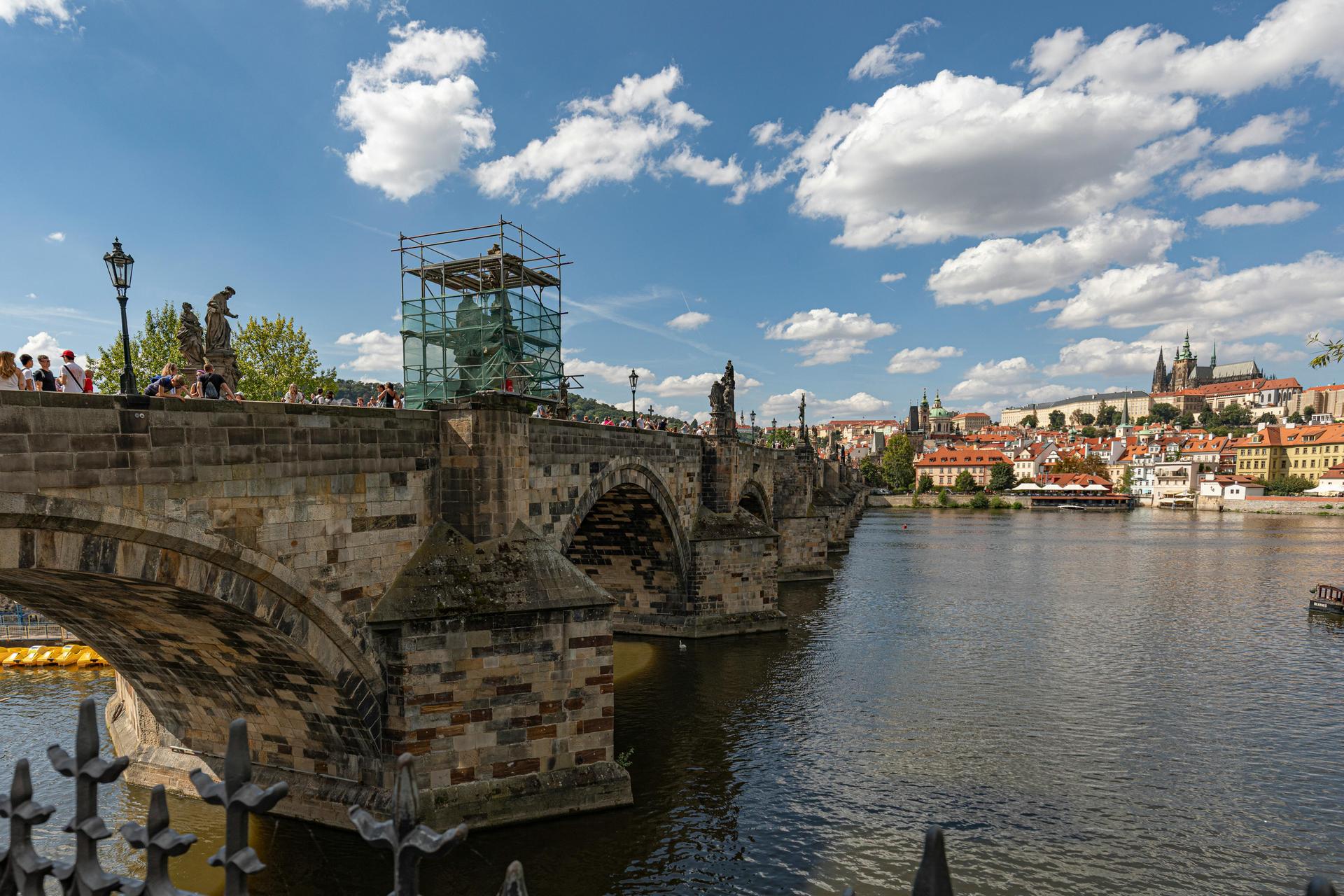
The Prague meeting closed with the kind of unstructured mingling these events typically end in. Children chased each other around chairs. Phone numbers were exchanged. Ambassador Orina, whose territory now stretches across four central European countries, fielded a final round of questions about appointment slots in Berlin. The PS left for his next stop. Outside, the evening light caught the towers along the Vltava, and the city slowly turned the room back into whatever it had been before.